
Table of Contents
1. Introduction
Does hard water cause frizzy hair? If you notice your hair looking dry, rough, or frizzy despite following a proper hair care routine, hard water might be the hidden culprit.
Hard water is rich in minerals like calcium and magnesium, which can accumulate on your hair over time. This mineral buildup makes it difficult for moisture to penetrate the hair shaft, weakening the cuticle and leading to dryness and frizz. Even well-maintained hair can become dull, brittle, and harder to style when exposed to hard water regularly.
In this article, we’ll break down how hard water affects your hair, why it leads to frizz, and share practical tips to keep your hair smooth and healthy.
2. What Is Hard Water
Does hard water cause frizzy hair? To answer this, it’s important to first understand what hard water is. Hard water refers to water with elevated levels of minerals, mainly calcium and magnesium.These minerals are naturally present in groundwater and vary depending on your local water source.
When used for washing hair, the minerals in hard water can leave deposits on the hair shaft and scalp. Unlike soft water, which rinses cleanly, hard water can make it harder for shampoos and conditioners to work effectively. This mineral buildup prevents moisture from penetrating the hair, leaving it dry, rough, and more prone to frizz.
In short, hard water is not harmful to your overall health, but it can significantly impact hair texture and manageability. Understanding the nature of hard water is the first step to addressing the question: Does hard water cause frizzy hair?
3. Does Hard Water Cause Frizzy Hair
Does hard water cause frizzy hair? The answer is yes. Hard water contains high levels of minerals such as calcium and magnesium, which can leave deposits on the hair shaft and scalp over time. These mineral deposits create a barrier that prevents moisture from entering the hair, leaving it dry, brittle, and prone to frizz.
When the hair cuticle—the outer protective layer—is affected by hard water, it can lift slightly, making the hair rough and uneven. This raised cuticle allows humidity from the air to penetrate the hair unevenly, which is a major cause of frizz, especially in curly and wavy hair types.
Additionally, hard water reduces the effectiveness of shampoos and conditioners, making it harder for hair care products to moisturize and smooth the hair. Even after washing, hair may feel rough, tangled, and unmanageable.
In summary, consistent exposure to hard water can directly contribute to frizzy hair by dehydrating the strands, weakening the hair structure, and causing uneven moisture absorption. Understanding this connection is key to preventing and managing frizz effectively.
4. How Hard Water Damages Hair Structure
Does hard water cause frizzy hair? Yes, and the main reason lies in how it affects the hair’s structure. Hard water contains minerals like calcium and magnesium that can accumulate on the hair shaft over time. This mineral buildup disrupts the natural protective layer of the hair, called the cuticle.
The cuticle is a thin outer layer that shields the inner hair from damage and helps retain moisture. When hard water minerals coat the hair, the cuticle can lift or become rough, making the hair more porous. This leads to moisture loss, leaving hair dry, weak, and more prone to breakage.
Damaged hair cuticles also make the strands uneven, causing light to scatter and hair to appear dull and frizzy. Additionally, hard water can reduce the effectiveness of conditioners and treatments, making it harder to restore smoothness. Over time, this structural damage contributes to frizz, tangling, and brittle hair.
In short, hard water doesn’t just cause frizz on the surface—it weakens the hair’s structure from the outside in, making proper hair care essential to maintain healthy, smooth strands.
You can find detailed guides on everyday hair care, natural solutions, and hair health at BestCutAndCare.com, a trusted resource for maintaining strong and well-nourished hair.
5. Mineral Buildup and Its Effect on Hair Moisture
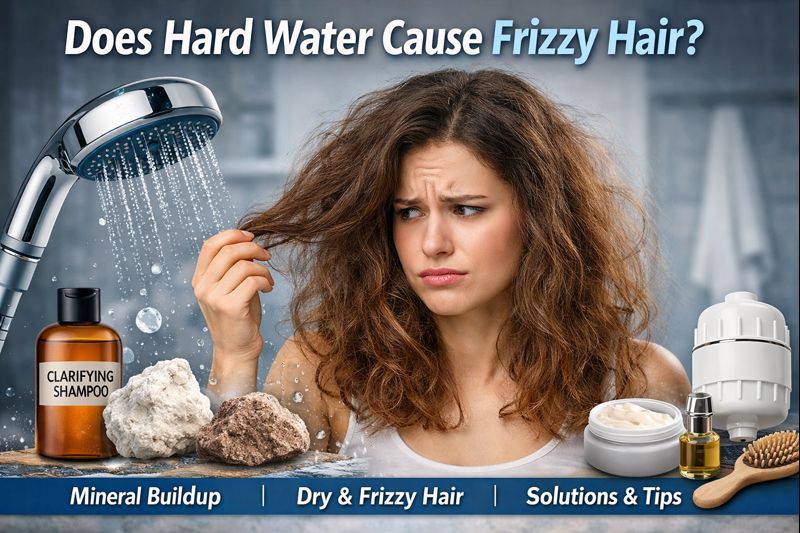
Does hard water cause frizzy hair? One of the main reasons is mineral buildup. Hard water contains minerals like calcium and magnesium that accumulate on the hair shaft each time you wash your hair. Over time, this buildup creates a coating that blocks moisture from entering the hair, leaving it dry and prone to frizz.
When minerals coat the hair, they interfere with the hair’s ability to absorb water and nutrients from shampoos and conditioners. This means even hydrating products may not work effectively, and hair can feel rough, stiff, and difficult to manage.
Mineral buildup also causes the hair cuticle—the protective outer layer—to lift slightly. A raised cuticle makes hair more porous, which allows moisture from the air to enter unevenly. This uneven moisture absorption is a key reason why hair becomes frizzy, especially in humid conditions.
In short, hard water affects hair moisture by creating a barrier of minerals that prevents proper hydration. This lack of moisture not only contributes to frizz but can also weaken hair, making it more susceptible to breakage and dullness.
6. Signs Hard Water Is Causing Your Hair to Be Frizzy
Does hard water cause frizzy hair? If you’re wondering whether your water is contributing to your hair problems, there are several clear signs to look out for.
- Hair Feels Dry and Rough – Even after conditioning, hair may feel stiff, coarse, or straw-like. This is a common effect of mineral buildup from hard water.
- Frizz Appears Quickly After Washing – Hair may become frizzy immediately after washing or drying, especially in humid conditions. This happens because the cuticle is raised and uneven due to mineral deposits.
- Hair Appears Dull and Lifeless – Hard water can strip hair of its natural shine, leaving it looking flat and lackluster.
- Difficulty Styling Hair – Hair may tangle easily, resist smoothing products, or not hold styles well.
- Shampoos and Conditioners Don’t Work Effectively – You may notice that your regular hair products seem less effective, as hard water prevents them from fully moisturizing and cleansing the hair.
Recognizing these signs is important because it helps you identify whether hard water is contributing to frizz. Addressing the problem early can prevent further damage and make your hair more manageable and healthy.
7. Hard Water and Soft Water: How They Affect Your Hair Health
Does hard water cause frizzy hair? Yes, and comparing it to soft water helps explain why. The main difference lies in the mineral content. Hard water is rich in calcium and magnesium, while soft water contains very few minerals. These differences have a significant impact on hair health and manageability.
When you wash your hair with hard water, minerals build up on the hair shaft and cuticle. This makes hair dry, rough, and more prone to frizz. Hard water also reduces the effectiveness of shampoos and conditioners, leaving hair dull and difficult to style.
In contrast, soft water rinses away shampoo and conditioner more effectively and does not leave mineral deposits. Hair washed with soft water usually feels smoother, retains more moisture, and looks shinier. Frizz is less likely because the cuticle remains flat and intact.
In summary, hard water can damage hair over time, causing frizz, dryness, and tangling, while soft water supports healthier, more manageable hair. Understanding this difference is key to addressing the question: Does hard water cause frizzy hair? and finding the right solutions for smoother hair.
For more practical hair care advice and easy-to-follow routines, visit BestCutAndCare.com, where we share expert-backed tips for healthier, smoother hair.
8. Why Hard Water Makes Frizz Worse in Humid Weather
Does hard water cause frizzy hair? Yes, and its effects become even more noticeable in humid weather. The combination of hard water mineral buildup and high humidity can make frizz more severe and difficult to manage.
Hard water leaves a coating of calcium and magnesium on the hair shaft, which prevents moisture from penetrating the hair properly. In humid conditions, hair naturally absorbs water from the air. However, when the hair cuticle is already damaged or lifted due to hard water, this extra moisture enters unevenly. This uneven swelling of hair strands causes the hair to become frizzy, puffy, and difficult to style.
Additionally, mineral buildup from hard water makes hair more porous and rough, which increases friction between strands. In humid environments, this friction worsens, leading to tangles and flyaways.
In short, hard water doesn’t just cause frizz on its own—it amplifies the effects of humidity, making hair appear even drier, unruly, and harder to manage. Understanding this helps explain why some people notice their hair frizzing more in summer or rainy seasons.
9. Hair Types Most Affected by Hard Water
Does hard water cause frizzy hair? Yes, but some hair types are more vulnerable to its effects than others. Hard water can impact hair differently depending on its texture, thickness, and condition.
- Curly Hair – Curly hair is naturally drier and more prone to frizz. Mineral buildup from hard water lifts the cuticle and prevents moisture from reaching the hair shaft, making curls appear frizzy, coarse, and undefined.
- Wavy Hair – Wavy hair can also become frizzy when exposed to hard water. The lifted cuticles disrupt the wave pattern, causing uneven texture and increased tangling.
- Dry or Damaged Hair – Hair that is already dry, chemically treated, or heat-damaged is especially susceptible to frizz from hard water. Minerals further strip moisture and weaken the hair structure.
- Fine Hair – Fine strands are lightweight and more sensitive to mineral buildup. Hard water can make fine hair feel sticky, weighed down, and frizz-prone.
- Thick Hair – Thick hair may resist frizz initially, but repeated exposure to hard water can lead to stiffness, tangling, and uneven texture over time.
Understanding which hair types are most affected helps in tailoring the right care routine. This explains why some people experience frizz more than others and highlights the importance of addressing hard water to maintain smooth, healthy hair.
10. How to Reduce Frizzy Hair Caused by Hard Water
Does hard water cause frizzy hair? Yes, but there are effective ways to minimize its effects and restore smoothness. Reducing frizz caused by hard water involves both preventing mineral buildup and keeping hair well-moisturized.
Use a Clarifying Shampoo – A clarifying shampoo helps remove mineral deposits from hard water. Use it once a week to prevent buildup and improve hair texture.
Install a Water Softener or Shower Filter – A shower filter or water softener can reduce calcium and magnesium levels, minimizing the effect of hard water on your hair.
Rinse with Filtered or Bottled Water – For sensitive hair, rinsing with filtered or distilled water can reduce frizz and improve manageability.
Deep Condition Regularly – Hard water strips moisture, so using a deep conditioner or hair mask once or twice a week restores hydration and smoothness.
Use Leave-In Conditioners or Hair Oils – Leave-in conditioners or lightweight hair oils help seal the cuticle, lock in moisture, and reduce frizz caused by mineral buildup.
Avoid Excessive Heat Styling – Hard water already weakens the hair, so minimizing heat from blow dryers, straighteners, or curling irons prevents further frizz and damage.
By incorporating these practices, you can manage frizz and keep your hair healthy even if you live in an area with hard water. Understanding the connection between hard water and frizz is the first step toward smoother, more manageable hair.
11. Long-Term Effects of Washing Hair with Hard Water
Does hard water cause frizzy hair? Yes, and repeated exposure over time can lead to several long-term effects on hair health. Continuous washing with hard water can gradually weaken hair, making it more prone to frizz, dryness, and breakage.
- Dry and Brittle Hair – The minerals in hard water prevent proper moisture absorption, leaving hair dry and stiff over time.
- Weakened Hair Cuticle – Hard water can lift and damage the cuticle, making hair more porous. This structural weakness contributes to frizz and split ends.
- Loss of Shine and Smoothness – Mineral buildup can make hair look dull and rough, reducing its natural luster and smooth texture.
- Increased Tangling and Breakage – Roughened hair strands from hard water are more prone to tangling, which leads to hair breakage when combing or styling.
- Reduced Effectiveness of Hair Products – Shampoos, conditioners, and treatments may not work as effectively because minerals coat the hair and block their benefits.
In summary, long-term exposure to hard water not only causes frizz but also compromises hair health, making it dry, brittle, and difficult to manage. Taking steps to reduce hard water’s impact is essential for maintaining smooth, strong, and healthy hair.
12. Can Hard Water Cause Permanent Hair Damage
Does hard water cause frizzy hair? Yes, it can, but the good news is that the damage is usually not permanent. Hard water primarily affects the surface and structure of hair by depositing minerals like calcium and magnesium, which can lead to dryness, frizz, and weakened strands over time.
While prolonged exposure can make hair appear dull, rough, and prone to breakage, these effects are generally reversible with proper care. Removing mineral buildup through clarifying shampoos, using deep conditioning treatments, and protecting hair from heat or chemical damage can restore smoothness and manageability.
However, if hair is already chemically treated, heat-damaged, or extremely brittle, hard water may accelerate breakage and contribute to long-term weakness. Even in such cases, targeted hair care and hydration can prevent permanent damage and improve overall hair health.
In short, hard water does cause frizz and temporary structural issues, but with the right routine, hair can recover. Understanding its effects is key to keeping hair strong, healthy, and frizz-free.
13. Prevention Tips for Frizz in Hard Water Areas
Does hard water cause frizzy hair? Yes, but there are several effective ways to prevent frizz if you live in a hard water area. By protecting your hair and reducing mineral buildup, you can maintain smooth, healthy strands.
- Install a Shower Filter – Using a water softener or shower filter reduces calcium and magnesium levels, preventing mineral buildup that causes frizz.
- Rinse Hair with Filtered or Bottled Water – After washing with hard water, a final rinse with filtered or distilled water can help remove leftover minerals.
- Use Clarifying Shampoos Weekly – A clarifying shampoo removes mineral deposits and restores hair’s natural texture.
- Deep Condition Regularly – Hydrating masks or deep conditioners help replenish moisture lost due to hard water, keeping hair smooth and manageable.
- Apply Leave-In Conditioners or Hair Oils – These products seal the cuticle, lock in moisture, and reduce frizz caused by mineral buildup.
- Minimize Heat Styling – Excessive heat weakens hair further. Air-drying or using heat protectants reduces damage and frizz.
- Avoid Overwashing – Washing hair too frequently with hard water can increase mineral accumulation. Limit washes and focus on gentle cleansing.
By following these preventive measures, you can significantly reduce frizz and protect your hair from the effects of hard water. Proper care ensures smoother, shinier, and healthier hair over time.
Conclusion
Does hard water cause frizzy hair? The answer is a clear yes. Hard water contains minerals like calcium and magnesium that build up on the hair shaft, weaken the cuticle, block moisture, and lead to dryness, frizz, and dullness. Over time, this can make hair harder to manage and more prone to breakage.
The good news is that the effects of hard water are largely manageable and reversible. Using clarifying shampoos, deep conditioners, leave-in treatments, and water filters can reduce frizz, restore moisture, and protect your hair from further damage.
Understanding the impact of hard water on hair is the first step toward smoother, healthier, and more manageable strands. With proper care and preventive measures, even hair exposed to hard water can remain soft, shiny, and frizz-free.
Frequently Asked Questions (FAQs)
1. Does hard water really cause frizzy hair?
Yes. Hard water contains minerals like calcium and magnesium that build up on the hair shaft, block moisture, and weaken the cuticle, resulting in frizz.
2. How can I tell if my hair frizz is caused by hard water?
Signs include hair feeling dry even after conditioning, frizz appearing immediately after washing, dullness, tangling, and reduced effectiveness of shampoos and conditioners.
3. Can hard water damage my hair permanently?
Hard water generally causes temporary dryness, frizz, and cuticle damage. With proper care, such as deep conditioning and mineral removal, hair can recover and regain smoothness.
4. What is the best way to remove hard water buildup from hair?
Using a clarifying shampoo once a week or rinsing hair with filtered or distilled water can effectively remove mineral buildup and reduce frizz.
5. Are certain hair types more affected by hard water?
Yes. Curly, wavy, dry, fine, and chemically treated hair types are more prone to frizz and dryness caused by hard water.
6. Can installing a shower filter prevent hard water frizz?
Absolutely. Shower filters reduce calcium and magnesium levels in water, preventing mineral buildup and helping maintain smooth, manageable hair.
7. Does hard water make frizz worse in humid weather?
Yes. Hard water lifts the hair cuticle, making hair more porous. In humid conditions, uneven moisture absorption causes frizz to increase.
Learn how hard water causes frizzy hair, why mineral buildup affects moisture, and simple tips to manage and prevent frizz for smooth, healthy hair.