
Table of Contents
1. Introduction
Curly hair is naturally beautiful, but it requires specific care to stay healthy, soft, and well-defined. Many people struggle with dryness, frizz, tangles, and breakage because curly strands have a spiral structure that makes it harder for natural scalp oils to travel from root to tip. As a result, curls often need extra moisture and gentle handling.
If you are searching for how to take care of curly hair naturally, the good news is that you don’t need expensive salon treatments or chemical-based products. With the right routine, natural ingredients, and consistent care, you can improve curl definition, reduce frizz, and strengthen your hair at home.
Learning how to take care of curly hair naturally starts with understanding your hair’s needs. Hydration, protection, and minimal heat styling are the foundation of healthy curls. In this guide, you will discover simple, effective, and natural methods to maintain beautiful curls using ingredients and techniques that are safe and easy to follow.
By the end of this article, you will clearly understand how to take care of curly hair naturally and build a routine that keeps your curls soft, manageable, and full of life.
2. Understanding Your Curl Type
Before learning how to take care of curly hair naturally, it is important to understand your specific curl type. Not all curly hair is the same. Different curl patterns require different levels of moisture, products, and care techniques.
Curly hair is commonly divided into categories:
Type 2 – Wavy Hair
- Loose “S” shape
- Can become frizzy easily
- Needs lightweight moisture
Type 3 – Curly Hair
- Defined spiral curls
- Prone to dryness and tangling
- Requires regular deep conditioning
Type 4 – Coily or Kinky Hair
- Tight curls or zig-zag pattern
- Very fragile and dry
- Needs intense moisture and gentle handling
The tighter the curl pattern, the more difficult it is for natural oils to travel down the hair shaft. This is why Type 3 and Type 4 hair usually require more hydration. Understanding this is a key step in mastering how to take care of curly hair naturally.
You should also consider:
- Hair thickness (fine, medium, thick)
- Hair porosity (how well your hair absorbs moisture)
- Scalp condition (dry, oily, or sensitive)
When you know your curl type and hair characteristics, you can choose the right natural oils, masks, and routines. This makes it much easier to follow a proper plan for how to take care of curly hair naturally without causing unnecessary damage or dryness.
3. Common Challenges for Curly Hair
Understanding the common problems curly hair faces is essential when learning how to take care of curly hair naturally. Curly hair has a coiled structure that makes it respond differently than straight hair, demanding more specialized care and attention.
1. Dryness
Due to its twisted structure, curly hair tends to retain less moisture, making it naturally drier than other hair types. The scalp produces natural oils, but these oils struggle to travel down the twists and bends of curly strands. As a result, curls often lack moisture and feel rough or brittle. Managing dryness is a key part of how to take care of curly hair naturally.
2. Frizz
Frizz happens when curly hair absorbs excess moisture from the air or lacks internal hydration. When curls are dry, the outer layer (cuticle) lifts, causing hair to look puffy and undefined. Proper moisturizing and sealing techniques help reduce this issue naturally.
3. Tangling and Knots
Because curls coil around themselves, they are more likely to tangle. Detangling roughly can cause breakage and hair fall. Gentle handling is essential when practicing how to take care of curly hair naturally.
4. Breakage and Split Ends
Curly hair is more fragile due to its structure. The bends in the hair shaft create weak points that can easily snap if handled improperly or exposed to too much heat and chemicals.
5. Lack of Definition
Without proper moisture and styling techniques, curls can lose their shape and look uneven. Natural conditioning and the right routine can restore definition without heavy products.
By understanding these challenges, you can create a routine that directly addresses them. This makes it much easier to follow a practical and effective approach to how to take care of curly hair naturally and maintain healthy, well-defined curls.
4. Natural Hair Care Basics
Before diving into specific treatments, it’s important to understand the fundamentals of how to take care of curly hair naturally. Natural hair care focuses on nourishing your curls without harsh chemicals, excessive heat, or synthetic products that can strip moisture.
1. Gentle Cleansing
Curly hair doesn’t need daily washing. Overwashing can remove essential oils, making hair dry and frizzy. Use a mild, sulfate-free shampoo or consider co-washing (washing with conditioner) to maintain natural moisture.
2. Regular Conditioning
Conditioning restores hydration and improves curl elasticity. Natural conditioners, such as aloe vera, coconut oil, or shea butter, help lock in moisture and reduce tangles. Incorporating regular conditioning is a key step in learning how to take care of curly hair naturally.
3. Minimal Heat Styling
Heat damages curly hair by weakening the protein structure, leading to breakage and frizz. Embrace air-drying and protective styling to keep curls healthy.
4. Moisture Retention
Moisture is the foundation of healthy curls. Using natural oils and leave-in treatments helps seal hydration and keeps curls soft and manageable.
5. Gentle Detangling
Always detangle hair gently using a wide-tooth comb or your fingers. Begin detangling at the tips and gradually move upward to minimize breakage. This practice is essential in any routine focused on how to take care of curly hair naturally.
By mastering these basics, you create a strong foundation for healthier, more defined curls. Natural hair care isn’t about quick fixes—it’s about consistent practices that maintain curl health over time.
5. Best Natural Cleansing Methods
Cleansing is an essential part of curly hair care, but harsh shampoos can strip natural oils and make curls dry and frizzy. Knowing the best natural cleansing methods is key to learning how to take care of curly hair naturally while keeping your curls soft and healthy.
1. Co-Washing (Conditioner Washing)
Co-washing means washing your hair with a conditioner instead of shampoo. It gently removes dirt and buildup without stripping moisture, making it perfect for curly hair. Use a silicone-free, natural conditioner to maintain hydration.
2. Sulfate-Free Shampoos
If you prefer using shampoo, choose a mild, sulfate-free formula. Sulfates can strip essential oils, causing dryness and frizz. Sulfate-free shampoos cleanse your scalp effectively while preserving natural oils, which is crucial when practicing how to take care of curly hair naturally.
3. Herbal Cleansing Rinses
Natural ingredients like hibiscus, aloe vera, chamomile, or green tea can be used to make gentle rinses. These not only clean the hair but also add shine, reduce frizz, and soothe the scalp naturally.
4. Apple Cider Vinegar (ACV) Rinse
A diluted ACV rinse (1 part vinegar to 3 parts water) helps remove buildup, balance scalp pH, and enhance curl definition. It’s a simple and effective method for natural curly hair care.
By following these best natural cleansing methods, you can maintain a clean, hydrated scalp and healthy curls without relying on harsh chemicals. Proper cleansing forms the foundation for any routine focused on how to take care of curly hair naturally.
“For more expert tips on maintaining healthy, hydrated curls, visit bestcutandcare.com and read our guide.
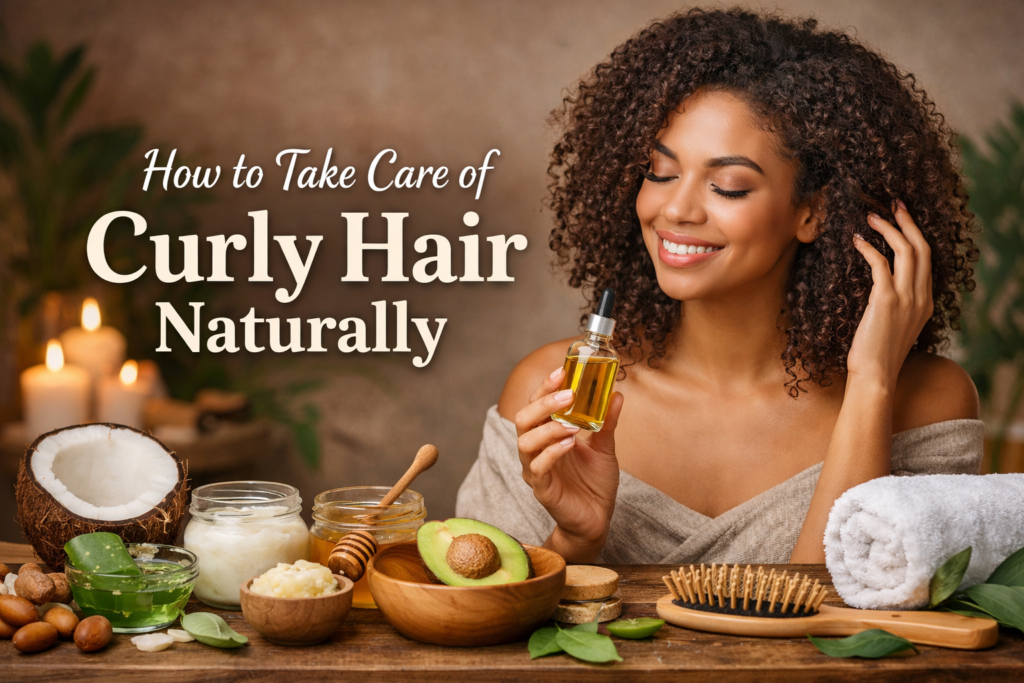
6. Natural Conditioning Treatments
Maintaining soft, manageable curls is a key part of how to take care of curly hair naturally. Natural conditioning treatments restore moisture, improve elasticity, and reduce frizz without exposing your hair to harsh chemicals.
1. Deep Conditioning Masks
Deep conditioning is essential for curly hair, which tends to be drier than other hair types. Using natural ingredients like coconut oil, shea butter, honey, or yogurt helps nourish the hair from root to tip. Apply the mask to damp hair, leave it on for 20–40 minutes, and rinse thoroughly. Regular deep conditioning strengthens curls and makes them easier to style.
2. Leave-In Conditioners
After washing, a natural leave-in conditioner can keep curls hydrated throughout the day. Lightweight oils like argan oil, jojoba oil, or aloe vera gel are excellent options. They lock in moisture, reduce frizz, and define curls naturally.
3. Aloe Vera Treatments
Aloe vera is a versatile natural conditioner. It soothes the scalp, improves hair elasticity, and adds shine without weighing curls down. Apply pure aloe vera gel to damp hair and leave it to absorb for healthy, soft curls.
4. Natural Hair Butters
Shea butter, mango butter, and cocoa butter are excellent for thicker or coily hair. They provide intense hydration, seal moisture, and protect curls from dryness and breakage. Apply sparingly to avoid heaviness.
Incorporating these natural conditioning treatments into your hair care routine is essential for anyone learning how to take care of curly hair naturally. With consistent care, your curls will stay hydrated, defined, and frizz-free.
7. Hydration & Moisture Retention
One of the most important aspects of how to take care of curly hair naturally is keeping your curls hydrated. Curly hair is prone to dryness because natural oils from the scalp have difficulty traveling down the twists and turns of each strand. Without proper moisture, curls can become frizzy, brittle, and difficult to manage.
1. Use Natural Oils
Oils like coconut oil, argan oil, olive oil, and jojoba oil help lock in moisture. After washing or conditioning, apply a small amount of oil to damp hair to seal hydration and prevent dryness throughout the day.
2. Hydrating Sprays
DIY sprays made with water, aloe vera, and a few drops of natural oil can refresh curls between washes. Lightly mist your hair to maintain softness and elasticity without weighing it down.
3. Leave-In Moisturizers
Using a natural leave-in conditioner after every wash provides continuous moisture. Ingredients like shea butter or aloe vera keep curls soft and manageable, helping you maintain healthy hair while learning how to take care of curly hair naturally.
4. Avoid Overwashing
Overwashing strips your hair of natural oils, which are essential for moisture retention. Stick to washing curls 2–3 times per week with a gentle, sulfate-free shampoo to preserve hydration.
5. Protective Styling
Twists, braids, or buns protect hair from friction and environmental stress, helping curls retain moisture longer. Using a satin or silk pillowcase at night also prevents moisture loss.
By focusing on hydration and moisture retention, you can keep your curls soft, shiny, and frizz-free, forming the foundation of an effective routine for how to take care of curly hair naturally.
8. Detangling Naturally
Proper detangling is a crucial step in how to take care of curly hair naturally. Curly hair is prone to knots and tangles due to its spiral structure, and rough handling can lead to breakage, split ends, and frizz. Learning gentle techniques helps maintain healthy, defined curls.
1. Use a Wide-Tooth Comb or Fingers
When detangling, always start with a wide-tooth comb or your fingers instead of a fine-tooth comb or brush. This minimizes breakage and allows you to work through tangles gently.Start combing from the tips and slowly work your way up to the roots.
2. Detangle on Damp or Conditioned Hair
Dry curls are more fragile and likely to snap. Detangle hair after applying a conditioner or a natural leave-in treatment. This provides slip, making knots easier to remove and reducing stress on your hair strands.
3. Work in Sections
Dividing your hair into small sections allows you to detangle more efficiently without pulling or tugging. This method ensures that every curl gets attention and remains intact.
4. Avoid Over-Manipulation
Frequent or aggressive detangling can weaken curls and cause frizz. Only detangle when necessary, ideally during wash day or when applying conditioning treatments.
5. Protect Ends
The ends of curly hair are the oldest and most fragile. Handle them gently and apply natural oils or leave-in conditioners to keep them nourished while learning how to take care of curly hair naturally.
By detangling naturally and carefully, you preserve curl integrity, reduce breakage, and keep your hair looking healthy and defined. This is an essential habit in any routine focused on natural curly hair care.
9. Natural Oils & Butters for Curly Hair
Using natural oils and butters is a powerful way to maintain soft, hydrated, and defined curls. Incorporating them into your routine is essential for anyone learning how to take care of curly hair naturally. These natural ingredients nourish the hair, seal in moisture, and protect curls from damage caused by dryness and environmental stress.
1. Coconut Oil
Coconut oil penetrates deep into the hair shaft, providing intense hydration and reducing protein loss. Apply a small amount to damp hair before or after washing to keep curls soft and manageable.
2. Argan Oil
Argan oil is rich in antioxidants and fatty acids that restore shine and tame frizz. It works well as a leave-in treatment for defined, healthy curls.
3. Shea Butter
Shea butter is ideal for thick or coily hair types. It provides deep moisture, prevents breakage, and forms a protective layer around the hair to lock in hydration.
4. Jojoba Oil
Jojoba oil closely resembles natural scalp oils, making it perfect for maintaining scalp health and preventing dryness. It helps keep curls soft without leaving them greasy.
5. Olive Oil
Olive oil strengthens hair, reduces frizz, and improves elasticity. It is excellent for hot oil treatments or as a pre-shampoo treatment to deeply nourish curls.
By regularly incorporating these natural oils and butters, you can enhance curl definition, reduce frizz, and maintain healthy, vibrant hair. Understanding how to use them properly is a critical part of how to take care of curly hair naturally.
10. DIY Hair Masks & Recipes
One of the most effective ways to keep curls healthy and nourished is by using natural DIY hair masks. These treatments are simple, affordable, and perfect for anyone learning how to take care of curly hair naturally. Homemade masks provide deep hydration, reduce frizz, and improve curl definition without harsh chemicals.
1. Coconut Oil & Honey Mask
Combine one tablespoon of honey with two tablespoons of coconut oil. Apply to damp hair, focusing on the ends, and leave it on for 30–40 minutes. Rinse thoroughly for soft, shiny curls.
2. Avocado & Yogurt Mask
Mash one ripe avocado and mix it with 2 tablespoons of plain yogurt. This mask nourishes dry curls and strengthens hair while enhancing natural moisture.
3. Banana & Olive Oil Mask
Blend one ripe banana with 1 tablespoon of olive oil. Apply to your hair for 20–30 minutes to improve elasticity and prevent breakage.
4. Aloe Vera & Coconut Milk Mask
Mix 3 tablespoons of aloe vera gel with 2 tablespoons of coconut milk. Apply to damp hair for frizz control and added shine.
5. Hibiscus Flower Hair Mask
Crush a few hibiscus flowers and mix with water or yogurt to make a smooth paste. Apply to the scalp and hair to stimulate growth, reduce dryness, and enhance curl definition.
Regularly using these DIY masks is a natural, safe, and effective way to support your curls. Incorporating them into your routine is a key part of how to take care of curly hair naturally while keeping your hair soft, hydrated, and full of life.
You can find additional natural hair care routines and DIY treatments for beautiful curls on bestcutandcare.com
11. Daily & Weekly Haircare Routine
Establishing a consistent routine is essential for maintaining healthy curls and mastering how to take care of curly hair naturally. Curly hair thrives on hydration, gentle handling, and protection, so planning daily and weekly care can make a noticeable difference in curl health and definition.
Daily Routine
- Hydrate Your Curls
Use a water-based leave-in spray or a few drops of natural oil to refresh curls and maintain softness throughout the day. - Gentle Detangling
Detangle hair carefully with fingers or a wide-tooth comb, starting from the ends and working up to the roots to prevent breakage. - Protective Styling
Use loose braids, buns, or the pineapple method at night to prevent friction and moisture loss while you sleep. - Avoid Excess Heat
Limit the use of blow dryers, straighteners, or curling irons to keep curls healthy and prevent damage.
Weekly Routine
- Wash or Co-Wash Hair
Depending on your hair type and scalp needs, wash or co-wash your hair 1–3 times per week using gentle, sulfate-free shampoo or conditioner. - Deep Conditioning
Apply a natural deep conditioning mask once a week to restore moisture, reduce frizz, and strengthen curls. - Scalp Massage
Gently massage your scalp with natural oils to stimulate circulation, promote growth, and nourish roots. - Trim Split Ends
Check for split ends weekly or monthly and trim as needed to maintain healthy hair and prevent breakage.
By following a structured daily and weekly routine, you can keep your curls soft, hydrated, and defined. Consistency is key in how to take care of curly hair naturally, helping your curls stay strong, healthy, and full of life.
12. Sleeping & Styling Tips
Proper sleeping and styling habits play a crucial role in how to take care of curly hair naturally. Curly hair is fragile and prone to frizz, breakage, and moisture loss, so simple protective techniques can make a huge difference in maintaining healthy, defined curls.
1. Use a Satin or Silk Pillowcase
Sleeping on cotton pillowcases can create friction that contributes to frizz and hair breakage. Sleeping on satin or silk reduces friction and helps curls retain moisture and shape overnight.
2. The Pineapple Method
Gather your hair loosely on top of your head before bed, securing it with a soft scrunchie. This “pineapple” technique preserves curl pattern, prevents tangling, and keeps your curls looking fresh in the morning.
3. Protective Styles
Loose braids, twists, or buns protect curls from friction and environmental stress. Protective styles also minimize hair manipulation, which helps prevent breakage and maintains curl definition.
4. Avoid Tight Hair Ties
Tight elastics can pull on hair, causing breakage and damage. Always use soft scrunchies or hair ties that don’t snag.
5. Refresh Curls in the Morning
Use a light water-based spray or a few drops of natural oil to revive curls and reduce frizz without weighing them down.
Incorporating these sleeping and styling tips is a simple but powerful way to enhance your routine for how to take care of curly hair naturally, keeping your curls healthy, hydrated, and beautifully defined every day.
13. Diet & Lifestyle for Healthy Curls
Taking care of your curls isn’t just about what you apply to your hair—it also involves what you put into your body. Understanding how to take care of curly hair naturally includes maintaining a balanced diet and healthy lifestyle that supports hair growth, strength, and hydration.
1. Stay Hydrated
Drinking plenty of water is essential for maintaining hair moisture from the inside out. Proper hydration helps keep curls soft, shiny, and less prone to frizz.
2. Eat Nutrient-Rich Foods
Include foods rich in vitamins, minerals, and healthy fats:
- Protein: Eggs, fish, beans, and nuts support strong hair structure.
- Omega-3 Fatty Acids: Found in salmon, flaxseeds, and walnuts; they improve hair hydration and shine.
- Vitamins A, C, and E: Support scalp health and hair growth through fruits and vegetables like carrots, spinach, and citrus fruits.
- Zinc and Biotin: Promote healthy hair growth and prevent breakage.
3. Limit Processed Foods and Sugars
Excess sugar and processed foods can contribute to inflammation, which may weaken hair follicles and reduce curl health.
4. Manage Stress
High stress levels can impact hair growth and texture. Incorporating meditation, exercise, or hobbies into your daily routine supports overall hair health.
5. Adequate Sleep
Getting enough rest allows your body to repair and regenerate cells, including those in hair follicles. Healthy sleep is a natural booster for strong, hydrated curls.
By combining proper nutrition, hydration, and lifestyle habits with your haircare routine, you strengthen the foundation for how to take care of curly hair naturally, ensuring your curls remain vibrant, soft, and full of life.
14. Natural Remedies for Common Problems
Curly hair can face several common challenges such as frizz, dryness, scalp irritation, and split ends. Knowing how to take care of curly hair naturally includes using simple, effective remedies to address these issues without harsh chemicals.
1. Frizz Control
Frizz is caused by dryness and environmental factors. Apply natural oils like argan oil, coconut oil, or jojoba oil to damp hair to seal in moisture. Aloe vera gel can also smooth the hair cuticle for defined, frizz-free curls.
2. Dryness
Dry curls need deep hydration. Use weekly DIY masks with ingredients like honey, yogurt, avocado, or shea butter to replenish moisture. Avoid over-washing and always use sulfate-free shampoos to maintain natural oils.
3. Scalp Health
A healthy scalp is essential for strong curls. Natural remedies like tea tree oil diluted in coconut oil, or aloe vera gel, can soothe irritation, reduce dandruff, and improve circulation.
4. Split Ends
Split ends weaken the hair and make curls look frizzy. Regular trims, combined with nourishing oils like olive oil or shea butter, help prevent breakage and maintain healthy ends.
5. Curl Definition
To enhance curl shape naturally, use a light leave-in conditioner or aloe vera gel, and scrunch your curls gently while air-drying. Avoid heavy styling products that weigh hair down.
Incorporating these natural remedies into your routine is a practical and effective way to maintain healthy curls. Mastering these techniques is a vital part of how to take care of curly hair naturally, helping your hair stay soft, defined, and vibrant every day.
15. Do’s & Don’ts for Natural Curly Hair Care
Following simple guidelines can make a huge difference in how to take care of curly hair naturally. Curly hair is delicate, so knowing what to do—and what to avoid—helps maintain healthy, defined curls.
Do’s
- Moisturize Regularly
Use natural oils, leave-in conditioners, or DIY masks to keep your curls hydrated. Moisture is the key to soft, frizz-free hair. - Use Gentle Detangling Techniques
Always detangle with your fingers or a wide-tooth comb on damp or conditioned hair to prevent breakage. - Protect Your Hair While Sleeping
Use satin or silk pillowcases, or tie your hair in a loose bun or braid to prevent friction and frizz. - Trim Split Ends Regularly
Regular trims keep curls healthy and prevent damage from traveling up the hair shaft. - Wash Hair 2–3 Times a Week
Overwashing removes natural oils. Stick to mild, sulfate-free shampoos or co-wash to preserve moisture.
Don’ts
- Avoid Harsh Chemicals
Stay away from sulfates, parabens, and silicones that strip moisture and damage curls. - Don’t Overuse Heat Styling Tools
Excess heat weakens hair and causes breakage. Embrace air-drying and protective styles instead. - Avoid Tight Hairstyles
Tight ponytails or elastics can pull on curls and cause breakage. Use soft scrunchies or loose styles. - Don’t Brush Dry Hair
Brushing dry curls increases frizz and breaks the hair. Always detangle gently on damp hair. - Don’t Skip Hydration
Neglecting internal hydration and nutrition affects hair health. Drink water and eat a nutrient-rich diet.
By following these practical do’s and don’ts, you create a strong foundation for how to take care of curly hair naturally, ensuring your curls remain healthy, soft, and beautifully defined every day.
Conclusion
Caring for curly hair naturally is all about understanding your curls, providing proper hydration, and using gentle, nourishing techniques. By following the steps outlined in this guide—choosing the right natural oils, using DIY masks, detangling carefully, and maintaining a consistent routine—you can keep your curls soft, healthy, and beautifully defined.
Mastering how to take care of curly hair naturally doesn’t require expensive products or salon treatments. With patience, consistency, and the right natural care, you can enjoy vibrant, frizz-free curls that reflect your hair’s true potential.
Healthy, natural curls are achievable at home—start today and embrace the beauty of your natural texture.
FAQs.
1. How often should I wash curly hair naturally?
Curly hair doesn’t need daily washing. Washing 2–3 times per week with a sulfate-free shampoo or co-washing is ideal to preserve natural oils and prevent dryness.
2. Which natural oils are best for curly hair?
Coconut oil, argan oil, jojoba oil, olive oil, and shea butter are excellent choices. They hydrate, reduce frizz, and protect curls from breakage.
3. Can DIY masks really improve curl health?
Yes! Masks using ingredients like avocado, honey, yogurt, aloe vera, and bananas provide deep hydration, strengthen hair, and enhance curl definition naturally.
4. How do I detangle curly hair without causing breakage?
Always detangle on damp or conditioned hair using your fingers or a wide-tooth comb. Start from the ends and work toward the roots gently.
5. Is it necessary to avoid heat styling for curly hair?
Yes. Heat can damage the hair’s structure, causing breakage and frizz. Air-drying, protective styles, and gentle styling help maintain healthy curls.
6. How can I reduce frizz naturally?
Apply light natural oils, aloe vera gel, or leave-in conditioners to damp hair. Protective styles and satin pillowcases also help minimize friction-induced frizz.
7. Does diet affect curly hair health?
Absolutely. Staying hydrated and eating nutrient-rich foods like proteins, omega-3 fatty acids, and vitamins A, C, and E supports hair strength, hydration, and growth.
Discover how to take care of curly hair naturally at home with proven tips, DIY hair masks, natural oils, and simple routines to keep your curls soft, hydrated, frizz-free, and healthy.