
Table of Contents
1. Introduction
Frizzy hair can be frustrating, especially when it feels dry, rough, and difficult to manage. Humidity, heat styling, chemical treatments, and lack of moisture can all cause the hair cuticle to lift, allowing moisture from the air to enter the strands and create unwanted frizz. Over time, this can make hair look dull, damaged, and harder to style.
That’s why many people search for the best smoothing treatment for frizzy hair to restore softness and control. A proper smoothing treatment works by sealing the hair cuticle, reducing moisture loss, and creating a protective layer around each strand. The result is smoother, shinier, and more manageable hair with significantly less frizz.
In this guide, you’ll learn what causes frizz, how smoothing treatments work, and how to choose the best smoothing treatment for frizzy hair based on your hair type, budget, and long-term goals.
2. What Causes Frizzy Hair?
Understanding the root causes of frizz is essential if you want to find the best smoothing treatment for frizzy hair. Frizz occurs when the hair cuticle is raised, allowing moisture from the environment to penetrate the hair shaft unevenly. This leads to hair that looks puffy, dry, and unmanageable.
Here are the most common causes:
- Humidity and Weather – Moisture in the air can make hair swell, causing frizz, especially in naturally curly or wavy hair.
- Dryness and Lack of Moisture – Hair that is naturally dry or over-washed loses essential oils, making it more prone to frizz.
- Heat Damage – Frequent use of hair dryers, straighteners, and curling irons can weaken the hair cuticle, leading to frizz.
- Chemical Treatments – Coloring, perming, or relaxing hair can strip natural oils and damage the cuticle, resulting in frizzy strands.
- Hair Porosity – High-porosity hair absorbs moisture quickly but also loses it just as fast, causing frizz.
Addressing these causes is key to selecting the best smoothing treatment for frizzy hair. By targeting the underlying issues, treatments can not only reduce frizz but also improve shine, manageability, and overall hair health.
3. What Is a Smoothing Treatment?
A smoothing treatment is a hair care procedure designed to reduce frizz, enhance shine, and make hair more manageable. Unlike straightening, which changes the natural shape of your hair, smoothing treatments primarily focus on taming frizz and sealing the hair cuticle.
Smoothing treatments work by coating or infusing the hair with proteins, oils, or other conditioning ingredients. This helps fill in gaps in the hair cuticle, locking in moisture and creating a protective barrier against environmental damage.
For anyone struggling with unruly hair, finding the best smoothing treatment for frizzy hair can make a significant difference. These treatments can be performed in professional salons or applied at home using specially formulated products, depending on your hair type, lifestyle, and desired results.
In short, a smoothing treatment not only reduces frizz but also enhances hair softness, shine, and overall health, making styling easier and more predictable.
4. Types of Smoothing Treatments for Frizzy Hair
If you are looking for the best smoothing treatment for frizzy hair, it’s important to understand the different types available. Each treatment works differently, lasts for varying periods, and may suit certain hair types better than others. Here are the most common options:
- Keratin Treatments
Keratin treatments are among the most popular options for reducing frizz. They infuse the hair with keratin protein, smoothing the cuticle and adding shine. Results usually last 2–4 months, depending on hair type and maintenance. - Hair Botox
Hair botox is a deep conditioning treatment that fills damaged areas of the hair with proteins, vitamins, and amino acids. It smooths frizz and improves elasticity without using harsh chemicals, making it ideal for dry or fragile hair. - Nanoplastia
Nanoplastia treatments use advanced technology to restructure the hair from within. They provide long-lasting frizz control, intense shine, and improved softness. Unlike traditional straightening, nanoplastia preserves natural volume while eliminating frizz. - Japanese Thermal Reconditioning
This method uses heat and chemical solutions to permanently smooth hair. It is highly effective for very curly or coarse hair, but it requires professional application and careful aftercare. - At-Home Smoothing Treatments
For those who prefer DIY solutions, there are several at-home smoothing kits, serums, and creams designed to tame frizz temporarily. While not as long-lasting as professional treatments, they are budget-friendly and convenient for daily use.
Choosing the right option depends on your hair type, budget, and desired results. Understanding the types of smoothing treatments is the first step in finding the best smoothing treatment for frizzy hair that suits your needs.
To learn more about maintaining healthy hair after treatments, check out our detailed hair care routines on bestcutandcare.com.
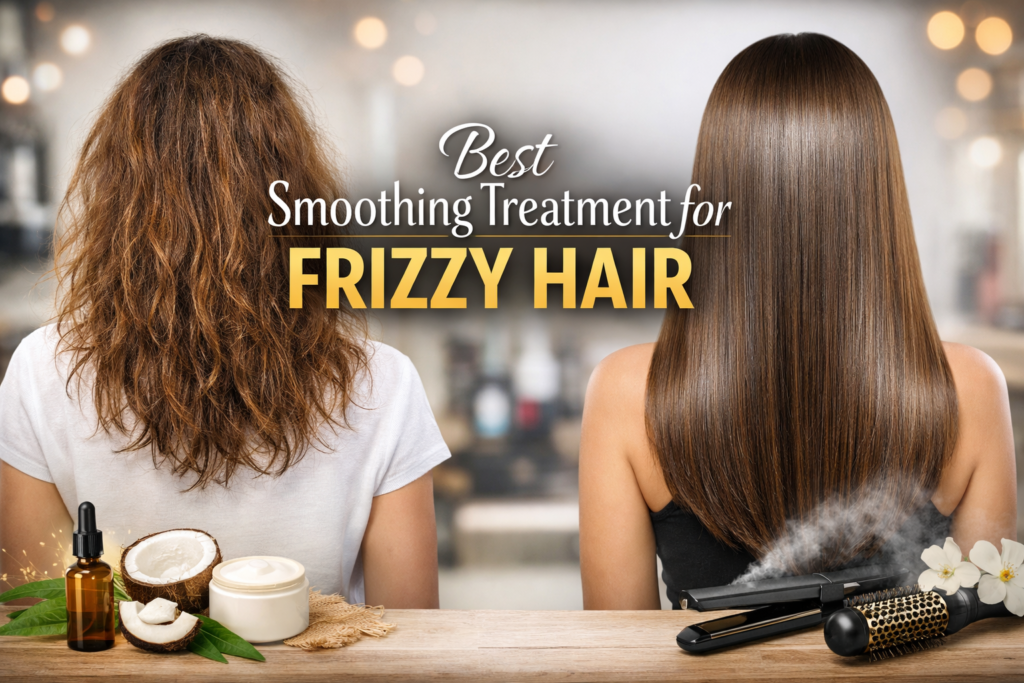
5. How to Choose the Best Smoothing Treatment for Frizzy Hair
Selecting the best smoothing treatment for frizzy hair requires understanding your hair’s needs and the results you want to achieve. Not every treatment works for all hair types, so making the right choice ensures maximum effectiveness and minimal damage.
Here are key factors to consider:
- Know Your Hair Type
- Fine hair may benefit from lightweight smoothing serums or keratin treatments.
- Thick, coarse, or curly hair may require stronger professional treatments like Japanese thermal reconditioning or nanoplastia.
- Assess Hair Damage
- Chemically treated or heat-damaged hair may need gentler options, such as hair botox or protein-enriched treatments, to avoid further breakage.
- Consider Duration of Results
- Professional treatments often last 2–6 months.
- At-home treatments usually provide short-term frizz control, ideal for occasional use.
- Check Ingredients
- Look for nourishing ingredients like keratin, argan oil, or natural oils.
- Avoid formaldehyde or harsh chemicals if you have a sensitive scalp or prefer safer formulas.
- Budget and Convenience
- Salon treatments provide longer-lasting results but are more expensive.
- At-home treatments are budget-friendly but require regular application.
By evaluating these factors, you can confidently select the best smoothing treatment for frizzy hair that fits your hair type, lifestyle, and long-term hair goals, ensuring smooth, shiny, and manageable results.
6. Benefits of Smoothing Treatments
Smoothing treatments offer more than just frizz control. Choosing the best smoothing treatment for frizzy hair can transform the texture, appearance, and overall health of your hair. Here are the key benefits:
- Reduces Frizz
The primary advantage of a smoothing treatment is its ability to tame frizz. By sealing the hair cuticle, it prevents moisture from causing puffiness, leaving hair sleek and manageable. - Enhances Shine
Smoothing treatments coat the hair with proteins and nourishing ingredients, reflecting light and giving your hair a natural, healthy shine. - Improves Manageability
After treatment, hair becomes softer, easier to comb, and simpler to style, saving time during your daily routine. - Protects Hair from Damage
Many treatments provide a protective layer that shields hair from heat styling, humidity, and environmental stressors. - Long-Lasting Results
Professional smoothing treatments can last for several months, reducing the need for daily styling and repeated use of heat tools. - Boosts Hair Health
Treatments like keratin or hair botox nourish damaged hair, restore elasticity, and reduce breakage, contributing to overall hair strength.
By understanding these benefits, you can make an informed choice when selecting the best smoothing treatment for frizzy hair, ensuring smoother, shinier, and healthier hair with long-lasting results.
7. Potential Side Effects & Risks
While smoothing treatments can transform frizzy hair, it’s important to be aware of potential side effects before choosing the best smoothing treatment for frizzy hair. Understanding these risks helps you make an informed decision and protects your hair and scalp.
- Chemical Exposure
Some professional treatments contain chemicals like formaldehyde or aldehydes, which can cause irritation, allergic reactions, or respiratory issues if inhaled during application. - Hair Weakening or Breakage
Overuse or improper application of smoothing treatments may weaken the hair shaft, leading to breakage, dryness, or split ends over time. - Scalp Sensitivity
Certain formulas can irritate sensitive scalps, causing redness, itching, or discomfort during or after treatment. - Temporary Hair Damage
Heat-based treatments, such as Japanese thermal reconditioning, require high temperatures. Incorrect use can cause dryness or heat damage to fragile hair. - Limited Results on Damaged Hair
Extremely damaged or porous hair may not respond fully to smoothing treatments, resulting in uneven texture or temporary improvements.
To minimize risks, choose a professional treatment suited to your hair type, ensure proper aftercare, and always follow manufacturer or stylist instructions. By doing so, you can safely enjoy the benefits of the best smoothing treatment for frizzy hair without compromising hair health.
8. Professional Salon Treatment vs At-Home Treatment
When deciding on the best smoothing treatment for frizzy hair, it’s important to understand the differences between professional salon treatments and at-home options. Each has its advantages and limitations depending on your hair type, budget, and lifestyle.
Professional Salon Treatments
- Effectiveness: Salon treatments, like keratin, nanoplastia, or Japanese thermal reconditioning, provide long-lasting frizz control and shine.
- Expert Application: A trained stylist ensures even application, minimizing damage and maximizing results.
- Duration: Results typically last 2–6 months, depending on hair type and maintenance.
- Cost: These treatments are more expensive but offer professional-grade results and customized solutions.
At-Home Treatments
- Convenience: At-home kits, serums, and creams are easy to apply without visiting a salon.
- Cost-Effective: They are generally more affordable than professional treatments.
- Duration: Results are temporary and may last only a few days to a couple of weeks.
- Safety: Many at-home products are formulated with gentler ingredients, but results can vary depending on hair type and correct usage.
Choosing between a professional salon treatment and an at-home option depends on your goals. For long-lasting smoothness and frizz control, professional treatments are usually the best choice. For quick, convenient results on a budget, at-home treatments can help maintain sleek hair between salon visits. Both options can contribute to achieving the best smoothing treatment for frizzy hair results when selected and used appropriately.
9. Aftercare Tips to Maintain Smooth Hair
Getting the best smoothing treatment for frizzy hair is only the first step. Proper aftercare is essential to maintain smoothness, shine, and long-lasting results. Here are some practical tips:
- Use Sulfate-Free Shampoo and Conditioner
Sulfates can strip your hair of natural oils and the smoothing treatment, causing frizz to return. Opt for gentle, sulfate-free formulas to preserve your results. - Deep Condition Regularly
Weekly deep conditioning treatments help maintain moisture, repair damage, and keep hair soft and manageable. - Protect Hair from Heat
Always use a heat protectant before blow-drying, straightening, or curling to prevent heat damage and frizz. - Avoid Excessive Washing
Frequent washing can shorten the lifespan of a smoothing treatment. Try to wash hair 2–3 times a week and use dry shampoo when needed. - Use Wide-Tooth Combs or Soft Brushes
Avoid friction that can lift the hair cuticle by detangling with gentle tools. This helps maintain smooth, frizz-free strands. - Limit Sun and Humidity Exposure
Excessive sun, wind, or humidity can undo the effects of your smoothing treatment. Wearing a hat or using protective hair products outdoors can help.
Following these aftercare tips ensures you get the most out of the best smoothing treatment for frizzy hair, keeping your hair smooth, shiny, and healthy for longer periods.
For tips on preventing frizz and keeping your hair smooth naturally, visit the frizz control section at bestcutandcare.com.
10. How Long Does a Smoothing Treatment Last?
One of the most common questions when considering the best smoothing treatment for frizzy hair is how long the results will last. The duration depends on the type of treatment, hair condition, and aftercare practices.
- Keratin Treatments
Typically last 2–4 months. Results gradually fade with washing, exposure to humidity, and styling. Proper aftercare, like using sulfate-free shampoos, can extend longevity. - Hair Botox
Usually lasts 2–3 months. While it smooths and nourishes hair, it does not permanently alter hair structure, so maintenance treatments are needed. - Nanoplastia
Can last 3–6 months, depending on hair type and care. It provides long-lasting frizz control while preserving natural volume. - Japanese Thermal Reconditioning
Results are more permanent, often lasting 6–12 months. However, new hair growth will require touch-ups to maintain a consistent smooth look. - At-Home Treatments
Generally last a few days to a couple of weeks. They are ideal for temporary frizz control but require frequent reapplication for consistent results.
By understanding the expected duration of each option, you can select the best smoothing treatment for frizzy hair that fits your lifestyle, hair type, and maintenance preferences. Proper care after the treatment is key to maximizing smoothness and frizz-free hair.
11. Natural Alternatives for Mild Frizz
If you’re looking to reduce frizz without chemicals, there are several natural alternatives that can complement or even replace the best smoothing treatment for frizzy hair—especially for mild frizz. These options nourish the hair, seal the cuticle, and add moisture for smoother, healthier strands.
- Coconut Oil
Coconut oil penetrates the hair shaft, providing deep hydration and reducing frizz. Apply a small amount to damp or dry hair, focusing on the ends, to maintain smoothness. - Argan Oil
Rich in antioxidants and fatty acids, argan oil tames frizz, enhances shine, and improves manageability. It works well as a leave-in serum or mixed with conditioner. - Aloe Vera Gel
Aloe vera helps smooth the hair cuticle and retains moisture, reducing puffiness caused by humidity. Apply aloe gel directly to hair or mix with a few drops of oil for added nourishment. - Honey-Based Masks
Honey is a natural humectant, attracting moisture to the hair. Combine honey with oils like coconut or olive oil for a frizz-fighting hair mask. - Avocado Treatments
Avocado is rich in vitamins, minerals, and healthy fats that strengthen hair and prevent frizz. Mash avocado with a little olive oil and apply as a 15–20 minute mask.
While these natural alternatives may not provide the same long-lasting results as professional treatments, they are safe, gentle, and excellent for maintaining smooth, frizz-free hair between applications of the best smoothing treatment for frizzy hair.
12. Who Should Avoid Smoothing Treatments?
While smoothing treatments can work wonders for frizzy hair, not everyone is an ideal candidate. Knowing who should avoid these treatments helps prevent hair damage and health risks when searching for the best smoothing treatment for frizzy hair.
- Extremely Damaged or Fragile Hair
Hair that is severely dry, brittle, or over-processed may not tolerate chemical or heat-based treatments. Applying a smoothing treatment on damaged hair can lead to breakage or further weakening. - Pregnant or Nursing Women
Some professional smoothing treatments contain chemicals such as formaldehyde or aldehydes. Pregnant or breastfeeding women should avoid chemical-based treatments to reduce potential health risks. - Sensitive Scalp or Skin Conditions
Individuals with scalp conditions like eczema, psoriasis, or severe allergies may experience irritation or adverse reactions from treatment chemicals. - Low Tolerance for Maintenance
Certain smoothing treatments require careful aftercare, including specific shampoos and limited washing. If proper maintenance is not possible, results may be unsatisfactory, making these treatments less effective.
By understanding these limitations, you can make an informed choice when seeking the best smoothing treatment for frizzy hair, ensuring both safety and effective results without compromising hair health.
Conclusion
Finding the best smoothing treatment for frizzy hair goes beyond simply picking a popular product—it requires a clear understanding of your hair’s unique characteristics, the level of frizz you are dealing with, and your daily lifestyle and maintenance habits. Every hair type reacts differently to treatments: fine or thin hair may need lightweight, gentle smoothing formulas to avoid weighing it down, while thick, coarse, or curly hair often benefits from stronger professional treatments like keratin, nanoplastia, or Japanese thermal reconditioning that provide long-lasting frizz control and shine.
Professional salon treatments offer high effectiveness and durability, often lasting several months, while at-home kits and serums provide convenience and affordability, though their effects are generally temporary. Additionally, natural alternatives like coconut oil, argan oil, aloe vera, and honey-based masks can support hair health, reduce mild frizz, and act as maintenance between professional treatments.
Aftercare plays a crucial role in sustaining results. Using sulfate-free shampoos and conditioners prevents the stripping of essential oils and protective layers from the smoothing treatment. Regular deep conditioning treatments nourish the hair and maintain moisture balance. Protecting your hair from excessive heat, sun exposure, and humidity ensures that the smoothness and shine last longer. Limiting frequent washing, using gentle detangling tools, and applying heat protectants when styling can also make a noticeable difference in hair texture and manageability
FAQs.
1. How do I know which smoothing treatment is best for my hair?
Consider your hair type, damage level, and desired results. Fine hair may need lightweight treatments, while coarse or curly hair may benefit from stronger professional options.
2. Are smoothing treatments safe for colored or chemically treated hair?
Yes, many treatments are safe for colored hair, but it’s important to consult your stylist and choose a formula designed for chemically treated hair to avoid damage.
3. How long will the results last?
Professional treatments typically last 2–6 months depending on the type, hair care routine, and hair type. At-home treatments usually last a few days to a couple of weeks.
4. Can I use natural alternatives instead of a chemical smoothing treatment?
Yes, oils like coconut or argan oil, aloe vera, honey masks, and avocado treatments can reduce mild frizz and improve hair health, though results are less long-lasting than professional treatments.
5. How can I maintain smooth hair after treatment?
Use sulfate-free shampoo, deep condition regularly, protect hair from heat, limit washing, and avoid excessive sun or humidity exposure to keep hair frizz-free.
Frizzy hair can be frustrating and hard to manage, but the best smoothing treatment for frizzy hair can transform your hair into smooth, shiny, and manageable strands. Whether you choose a professional salon treatment, an at-home kit, or natural alternatives, understanding your hair type and proper aftercare is key to long-lasting results.