
Table of Contents
1. Introduction
Curly hair is beautiful and unique, but it can also be more delicate than other hair types. Because of its spiral structure, natural oils from the scalp have a harder time traveling down the hair strands. This often makes curls drier and more prone to breakage, frizz, and split ends. Many people struggle to maintain healthy curls, especially after heat styling, chemical treatments, or improper hair care routines.
If you are wondering how to fix damaged curly hair, the good news is that it is possible with the right approach. Restoring curly hair health involves improving moisture balance, reducing further damage, and using gentle hair care practices. Simple changes like deep conditioning regularly, avoiding harsh products, and protecting your curls from heat can make a big difference over time.
In this guide, you will learn how to fix damaged curly hair step by step. We will cover the common causes of damage, effective treatments, and practical tips that help bring back stronger, softer, and more defined curls. Whether your curls are slightly dry or severely damaged, the right care routine can help them recover and look healthy again.
2. Understanding Curly Hair Damage
Before learning how to fix damaged curly hair, it is important to understand what curly hair damage actually means. Curly hair has a unique structure with bends and twists along the hair strand. These curves make the hair more fragile compared to straight hair because the natural oils from the scalp do not spread evenly from root to tip. As a result, curly hair often becomes dry, weak, and more likely to break.
Damage happens when the hair cuticle, which is the outer protective layer of the hair, becomes lifted or broken. When this layer is damaged, the hair loses moisture and strength. This can lead to common problems such as frizz, split ends, rough texture, and loss of curl definition. In many cases, people start searching for ways on how to fix damaged curly hair when their curls stop looking healthy or feel dry and brittle.
There are several reasons why curly hair gets damaged. Frequent heat styling, harsh shampoos, chemical treatments, and lack of moisture are some of the most common causes. Even everyday habits like rough towel drying or brushing dry curls can weaken the hair over time. Understanding these factors is the first step in learning how to fix damaged curly hair and preventing further harm.
By recognizing the signs and causes of damage early, you can take the right steps to restore your curls. With proper care, hydration, and gentle handling, damaged curly hair can gradually regain its strength, softness, and natural bounce.
3. Common Causes of Damage in Curly Hair
To understand how to fix damaged curly hair, it is important to first know what causes the damage. Curly hair is naturally more delicate, and certain habits or treatments can weaken the hair over time. When these issues are not addressed, curls may become dry, frizzy, and prone to breakage.
1. Excessive Heat Styling
Frequent use of flat irons, curling wands, and blow dryers can damage the hair cuticle. High heat removes moisture from curly hair, making it dry and brittle. This is one of the main reasons many people start looking for ways on how to fix damaged curly hair.
2. Chemical Treatments
Hair coloring, bleaching, perming, or relaxing treatments can weaken curly hair. These processes change the natural structure of the hair and often lead to dryness, split ends, and loss of curl pattern.
3. Lack of Moisture
Curly hair naturally requires extra hydration compared to other hair types, as its twists and coils make it harder for natural oils to travel down the hair shaft. This increased need for moisture helps prevent dryness, frizz, and breakage, keeping curls soft, defined, and healthy. When the hair does not receive enough hydration through conditioners, masks, or oils, it becomes rough and difficult to manage. Maintaining moisture is essential when learning how to fix damaged curly hair.
4. Using Harsh Hair Products
Shampoos that contain strong sulfates or alcohol-based styling products can strip natural oils from the hair. This makes curls dry and increases the risk of damage over time.
5. Rough Handling and Improper Detangling
Brushing dry curly hair or pulling knots aggressively can cause breakage. Curly hair should be handled gently, preferably detangled with a wide-tooth comb or fingers while it is damp and conditioned.
6. Overwashing the Hair
Washing curly hair too often can remove its natural oils. Without these oils, the hair loses moisture and becomes more vulnerable to damage.
Understanding these common causes helps you take better care of your curls. Once you know what is harming your hair, it becomes easier to follow the right steps on how to fix damaged curly hair and keep your curls healthy in the long run.
4. Signs Your Curly Hair Is Damaged
Knowing the signs of damage is an important step in learning how to fix damaged curly hair. Curly hair may not always show obvious problems at first, but early recognition can prevent further harm and help you restore healthy curls more effectively.
1. Dryness and Lack of Shine
One of the most common signs of damage is hair that feels dry and looks dull. Damaged curly hair struggles to retain moisture, making curls appear lifeless and frizzy.
2. Split Ends and Breakage
Split ends occur when the hair cuticle is weakened or broken. If you notice strands breaking easily or frayed ends, it’s a clear sign that your curls are damaged and need care.
3. Frizz and Unruly Curls
Excessive frizz, especially when humidity is low or high, can indicate weakened hair. Curly hair loses its natural curl pattern when the structure of the strand is compromised.
4. Tangling and Knots
Damaged curls tend to tangle more easily. If you find your hair knotting frequently even after detangling, it’s a sign the hair is fragile and needs repair.
5. Loss of Elasticity
Healthy curly hair stretches slightly and returns to its natural shape. When hair feels stiff, snaps easily, or doesn’t bounce back, it indicates internal damage.
6. Rough or Coarse Texture
Hair that feels rough to the touch or loses its softness is often dehydrated and damaged. This texture change makes styling difficult and affects the overall appearance of curls.
Recognizing these signs early is key to knowing how to fix damaged curly hair effectively. Once you identify the problems, you can take targeted steps with treatments, moisture routines, and gentle handling to restore your curls to their healthy, bouncy state.
For more expert tips on maintaining healthy hair, visit bestcutandcare.com and explore our detailed guides.
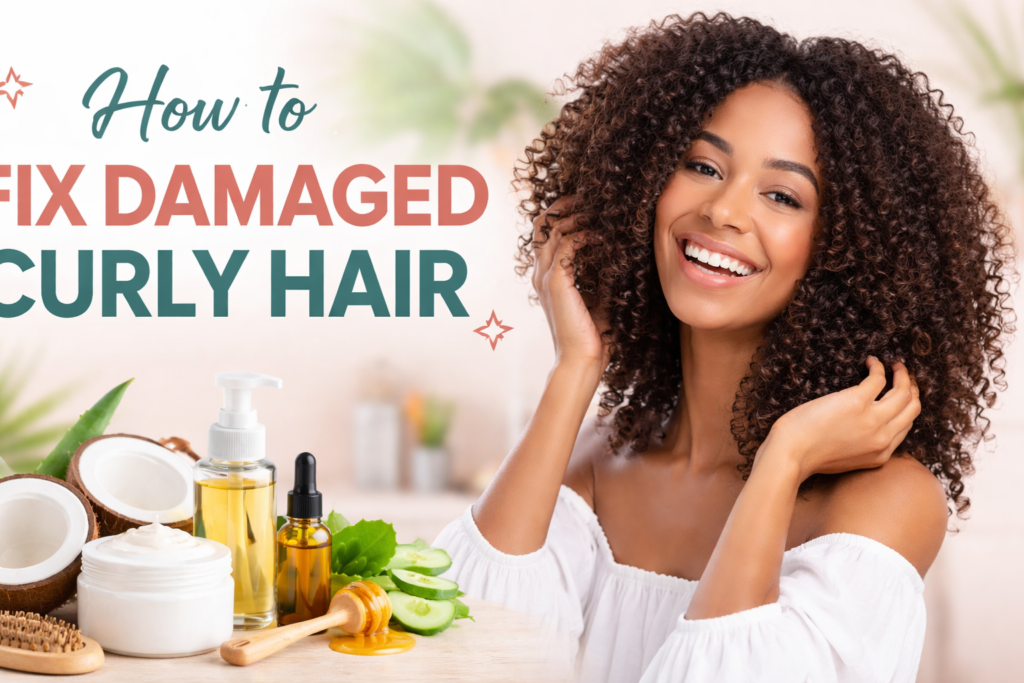
5. Daily Hair Care Routine for Damaged Curls
Establishing a consistent routine is essential when learning how to fix damaged curly hair. Damaged curls need gentle care, moisture, and protection every day to restore health and maintain their natural bounce. Here’s a simple, effective daily routine:
1. Gentle Cleansing
Use a sulfate-free shampoo or cleansing conditioner 2–3 times a week. Washing curly hair too frequently can remove its natural oils, leaving it dry, brittle, and more susceptible to breakage and damage. Maintaining a balanced washing routine helps preserve moisture and keeps curls healthy and resilient. Focus on massaging the scalp gently rather than scrubbing the hair strands.
2. Deep Conditioning and Moisturizing
After washing, apply a nourishing conditioner or deep conditioning mask. Choose hair care products that contain nourishing ingredients such as shea butter, coconut oil, or argan oil, as these help lock in moisture, reduce frizz, and enhance the natural shine and elasticity of curly hair. This helps replenish lost moisture, smooth the cuticle, and strengthen curls.
3. Detangling Carefully
Detangle your curls while they’re damp and coated with conditioner. Gently use a wide-tooth comb or your fingers, beginning at the ends and slowly working up toward the roots to prevent breakage and preserve curl definition. Avoid brushing dry curls to prevent breakage.
4. Leave-In Treatments
Apply a lightweight leave-in conditioner or curl cream to keep hair hydrated throughout the day. This provides an extra layer of moisture and protection, which is crucial when learning how to fix damaged curly hair.
5. Protecting Hair Overnight
Use a satin or silk pillowcase, or wrap your hair in a silk scarf at night. This reduces friction, prevents tangling, and helps maintain curl definition while you sleep.
6. Limit Heat Styling
Avoid daily use of blow dryers, flat irons, or curling tools. If heat styling is necessary, always use a heat protectant spray to minimize further damage.
By following this daily routine, you can gradually restore moisture, reduce breakage, and improve curl definition. Consistency is key when implementing techniques how to fix damaged curly hair, and over time, your curls will look healthier, shinier, and more manageable.
6. Deep Conditioning Treatments
Deep conditioning is one of the most effective ways to repair and restore curls. If you’re wondering how to fix damaged curly hair, regular deep conditioning treatments are essential. They help replenish lost moisture, strengthen weak strands, and improve curl elasticity.
1. Why Deep Conditioning Matters
Curly hair tends to be naturally drier since the scalp’s oils struggle to move down the twists and coils of the hair shaft, making regular hydration essential for healthy, defined curls.Deep conditioners penetrate the hair cuticle, providing intense hydration and repairing damage from heat, chemicals, or environmental stress.
2. Choosing the Right Deep Conditioner
Look for products with nourishing ingredients like:
- Shea butter – deeply moisturizes and softens curls
- Coconut oil – strengthens and prevents breakage
- Argan oil – restores shine and smoothness
- Keratin or protein-based treatments – rebuilds damaged hair structure
3. How to Apply Deep Conditioner
- Wash your hair with a gentle, sulfate-free shampoo.
- Apply the deep conditioner evenly from roots to ends, focusing on the driest areas.
- After applying your treatment, cover your hair with a shower cap and let it sit for 20–30 minutes to allow the product to deeply penetrate and nourish your curls.
- Rinse thoroughly with cool or lukewarm water to seal in moisture.
4. Frequency of Use
For damaged curls, deep conditioning 1–2 times per week is ideal. Overdoing it with protein-heavy treatments can make hair stiff, so balance protein and moisture-based products.
Regular deep conditioning is a cornerstone for anyone learning how to fix damaged curly hair. Consistent care helps restore softness, shine, and curl definition, making your curls more resilient and healthy over time.
7. Leave-In Conditioners & Curl Creams
Leave-in conditioners and curl creams are essential for helping restore moisture and protect curls, keeping them soft, defined, and less prone to frizz throughout the day. If you are learning how to fix damaged curly hair, these products help maintain moisture, reduce frizz, and improve curl definition throughout the day.
1. What Leave-In Conditioners Do
Leave-in conditioners are lightweight products applied after washing and conditioning your hair. They stay in the hair without being rinsed out and provide long-lasting hydration. For damaged curls, this extra moisture helps strengthen the hair and prevent further breakage.
2. Benefits of Curl Creams
Curl creams are designed to shape and define curls while keeping them soft and manageable. They also help control frizz and protect curls from dryness. Many curl creams contain moisturizing ingredients that support the process of how to fix damaged curly hair by improving texture and smoothness.
3. How to Apply Them Correctly
For best results:
- After washing your hair, apply a leave-in conditioner to damp strands to help lock in moisture, improve manageability, and keep your curls smooth and well-defined.
- Take a small amount of the product and spread it evenly through your hair to ensure each strand receives moisture and protection without weighing your curls down.
- Follow with curl cream to enhance curl definition.
- Gently scrunch your hair upward to encourage natural curl formation.
4. Choosing the Right Products
Choose products formulated with nourishing ingredients like shea butter, aloe vera, coconut oil, or argan oil, as they help hydrate the hair, reduce frizz, and support stronger, healthier-looking curls.
Avoid products with harsh alcohols or sulfates, as they can dry out curly hair.
Using leave-in conditioners and curl creams regularly is a simple but effective step in how to fix damaged curly hair. When used as part of your routine, they help keep curls hydrated, defined, and healthier over time.
Discover additional curly hair care routines and natural treatments on bestcutandcare.com to keep your curls strong and manageable.
8. Oils & Natural Treatments for Repair
Natural oils and home treatments can play a major role in restoring moisture and strength to curls. If you are searching for how to fix damaged curly hair, using the right oils regularly can help repair dryness, reduce breakage, and improve the overall health of your curls.
1. Coconut Oil for Deep Moisture
Coconut oil is widely used for curly hair because it penetrates the hair shaft and helps reduce protein loss. Applying a small amount to your hair before washing or as a treatment can make curls softer and stronger over time.
2. Argan Oil for Shine and Smoothness
Argan oil is rich in antioxidants and vitamin E, which help repair dry and brittle hair. It also adds natural shine and controls frizz, making curls look healthier and more defined.
3. Castor Oil for Hair Strength
Castor oil is thicker than many other oils and is known for strengthening weak strands. It can help reduce breakage and support healthier hair growth when used regularly.
4. Aloe Vera for Hydration
Aloe vera is a natural ingredient that helps soothe the scalp and hydrate the hair. It improves moisture balance and can help curls regain softness, which is important when learning how to fix damaged curly hair.
5. DIY Natural Hair Masks
You can also create simple hair masks at home using natural ingredients. For example:
- Coconut oil + honey for deep moisture
- Aloe vera + yogurt for hydration
- Argan oil + banana for softness and shine
Apply these treatments to damp hair, leave them on for about 20–30 minutes, and rinse thoroughly.
Using oils and natural treatments consistently is an effective step in how to fix damaged curly hair. Over time, these methods help restore moisture, strengthen hair strands, and bring back healthy, defined curls.
9. Best Products for Repairing Damaged Curly Hair
Choosing the right hair care products is an important step when learning how to fix damaged curly hair. Curly hair needs products that restore moisture, strengthen the strands, and protect the hair from further damage. Using gentle and nourishing formulas can help improve the health and appearance of your curls over time.
1. Sulfate-Free Shampoos
A mild, sulfate-free shampoo is ideal for damaged curly hair. These shampoos cleanse the scalp without removing natural oils that curls need to stay hydrated. Regular use helps reduce dryness and supports the process of how to fix damaged curly hair.
2. Moisturizing Conditioners
A rich conditioner is essential for repairing damaged curls. It helps soften the hair, reduce tangles, and restore moisture. Conditioners with hydrating ingredients like natural oils, butters, and proteins can strengthen weak strands and improve hair texture.
3. Deep Repair Hair Masks
Hair masks provide intense nourishment and repair. They work deeper than regular conditioners and help restore moisture balance. Using a hair mask once or twice a week can significantly improve the condition of damaged curls.
4. Leave-In Conditioners
Leave-in conditioners keep hair hydrated throughout the day and protect it from dryness and frizz. They also make curls easier to manage and style, which is helpful when focusing on how to fix damaged curly hair.
5. Curl Creams and Styling Products
Curl creams help define curls while maintaining softness and moisture. They also protect curls from environmental damage and reduce frizz, allowing damaged hair to recover more easily.
6. Nourishing Hair Oils and Serums
Lightweight oils and serums help seal moisture into the hair and improve shine. They also protect the hair cuticle and reduce breakage, which supports the recovery process for damaged curls.
Using the right combination of these products can make a noticeable difference in your hair’s health. When included in a consistent routine, they help strengthen curls, restore moisture, and gradually improve results for anyone looking to learn how to fix damaged curly hair effectively.
10. Heat Protection & Styling Tools
Heat styling can quickly damage curly hair if it is not done carefully. Understanding how to protect your hair from heat is an important part of learning how to fix damaged curly hair. Excessive heat weakens the hair structure, removes moisture, and leads to dryness, frizz, and breakage.
1. Why Heat Protection Is Important
When heat is applied directly to the hair, it can damage the outer layer of the hair strand. This makes curls lose their natural shape and strength. Using heat protection methods helps reduce damage and keeps curls healthier while styling.
2. Use a Heat Protectant Before Styling
Before using any hot tools, always apply a heat protectant product. These products create a protective layer on the hair that helps reduce moisture loss and prevent further damage. This step is essential when working on how to fix damaged curly hair.
3. Choose the Right Styling Tools
Using modern styling tools with adjustable temperature settings is safer for curly hair. Tools that distribute heat evenly can reduce the risk of damage. It is also helpful to use lower heat settings whenever possible.
4. Limit Heat Styling
One of the best ways to protect damaged curls is to avoid frequent heat styling. Try air-drying your hair or using heat-free styling methods to maintain your natural curl pattern while your hair recovers.
5. Try Gentle Styling Alternatives
Instead of using heat tools regularly, you can style your curls using safer techniques. For example:
- Scrunching curls while hair is damp
- Using curl-friendly styling products
- Braiding or twisting hair to create natural waves
Protecting your hair from excessive heat plays a major role in how to fix damaged curly hair. By using heat protectants, choosing the right tools, and reducing heat exposure, you can help your curls regain strength and stay healthy over time.
11. Professional Treatments & Salon Options
Sometimes home care alone is not enough to fully restore damaged curls. Professional treatments can provide deeper repair and faster results. If you are trying to understand how to fix damaged curly hair, visiting a salon for specialized treatments may help improve the condition of your hair.
1. Protein Treatments
Protein treatments are designed to strengthen weak and brittle hair. These treatments rebuild the hair structure by adding proteins that help repair damaged strands. They are especially helpful for curly hair that has been affected by heat styling or chemical processes.
2. Bond-Building Treatments
Bond-building treatments focus on repairing the internal structure of the hair. When hair is damaged, the bonds inside the strands can break. These treatments help reconnect those bonds, making the hair stronger, smoother, and healthier. This can be an effective step in how to fix damaged curly hair.
3. Deep Moisture Treatments
Professional deep conditioning treatments provide intense hydration that may be difficult to achieve at home. These treatments help restore softness, reduce frizz, and improve curl definition.
4. Trim and Haircut for Damaged Ends
Regular trims are important for removing split ends and preventing further breakage. Cutting off damaged ends helps curls look healthier and allows new growth to stay strong.
5. Scalp Treatments
Healthy hair starts with a healthy scalp. Professional scalp treatments help remove buildup, improve scalp health, and support stronger hair growth. This can also contribute to the process of learning how to fix damaged curly hair.
Professional treatments can be a helpful addition to your routine, especially if your curls are severely damaged. When combined with proper daily care and moisturizing routines, these salon options can significantly improve the health and appearance of curly hair over time.
Conclusion
Fixing damaged curly hair is entirely possible with the right care, treatments, and daily routine. By understanding the causes of damage, recognizing the signs, and using targeted solutions like deep conditioning, leave-in conditioners, nourishing oils, and gentle styling techniques, you can restore your curls to their natural health. Professional treatments and regular trims can also speed up recovery and maintain long-term curl health. Consistency is key — with patience and proper care, your curls can regain strength, shine, and definition. Learning how to fix damaged curly hair is about combining hydration, protection, and gentle handling to bring your curls back to life.
FAQs.
Q1: How often should I deep condition my curly hair?
A: For damaged curly hair, deep conditioning 1–2 times per week is ideal. This helps restore moisture and strengthen strands without overloading the hair.
Q2: Can I repair split ends without trimming?
A: While treatments can temporarily smooth split ends, trimming is the only permanent solution to prevent further breakage and maintain healthy curls.
Q3: Which oils are best for damaged curly hair?
A: Coconut oil, argan oil, and castor oil are excellent for moisturizing, strengthening, and reducing breakage in curly hair.
Q4: How can I protect my curls from heat damage?
A: Always use a heat protectant before styling, limit the frequency of heat styling, and choose low-heat tools or heat-free styling methods whenever possible.
Q5: How long does it take to see results after starting a repair routine?
A: Visible improvement usually appears within 4–6 weeks with consistent care, though severely damaged hair may take longer to fully recover.
Q6: Are professional treatments necessary to fix damaged curls?
A: Not always, but professional treatments like protein or bond-repair treatments can accelerate recovery and are especially helpful for severely damaged hair.
Struggling with dry, frizzy, or weak curls? Learn how to fix damaged curly hair with simple and effective methods. This guide covers daily care routines, deep conditioning treatments, leave-in conditioners, curl creams, and nourishing natural oils to restore moisture and strength. You’ll also discover tips for gentle detangling, heat protection, and professional treatments that help repair damage and maintain healthy, defined curls. Whether your hair is slightly dry or severely damaged, following these steps will improve curl elasticity, reduce breakage, and bring back soft, shiny, and manageable curls.