
Table of Contents
1. Introduction
Healthy hair growth depends on more than just the products you apply on your scalp. Nutrition plays a critical role in strengthening hair follicles, supporting the growth cycle, and reducing hair fall. Many people experience slow growth, thinning, or excessive shedding simply because their body lacks essential nutrients.
This is where the best vitamins for hair growth naturally become important. Vitamins help nourish hair from within by improving scalp health, boosting blood circulation, and supporting keratin production. When your body receives the right vitamins through natural food sources, hair growth becomes stronger, healthier, and more sustainable over time.
In this guide, you’ll learn which vitamins support natural hair growth, how they work, and how to include them in your daily diet without relying heavily on supplements. Understanding these nutrients can help you build a simple, effective approach to growing healthier hair naturally.
2. Vitamin Type & Role in Hair Growth
Hair growth is a complex biological process that depends heavily on proper nutrition. Different vitamins play specific roles in maintaining healthy hair follicles, supporting the scalp, and promoting consistent hair growth. When the body lacks these essential nutrients, hair may become weak, thin, or stop growing efficiently.
The best vitamins for hair growth naturally work by supporting the hair growth cycle, which includes the growth (anagen), rest (telogen), and shedding phases. Vitamins help regulate cell division, improve oxygen delivery to hair roots, and protect hair follicles from oxidative stress.
Some vitamins, such as B-complex vitamins, are essential for energy production and keratin formation—the protein that makes up hair strands. Vitamin D helps activate hair follicles and supports the creation of new growth, while vitamin A aids in producing natural scalp oils that keep hair moisturized. Vitamin C and vitamin E act as antioxidants, protecting hair follicles from damage and improving scalp circulation.
Each vitamin contributes differently, but together they create the foundation for healthy, natural hair growth. Getting these nutrients from whole foods ensures better absorption and long-term benefits without the risks associated with excessive supplementation.
3. Natural Food Sources
Getting nutrients from whole foods is one of the safest and most effective ways to support hair growth. Natural foods provide vitamins in their most bioavailable form, allowing the body to absorb and use them efficiently. This approach plays a key role when focusing on the best vitamins for hair growth naturally, as it supports long-term hair health without relying heavily on supplements.
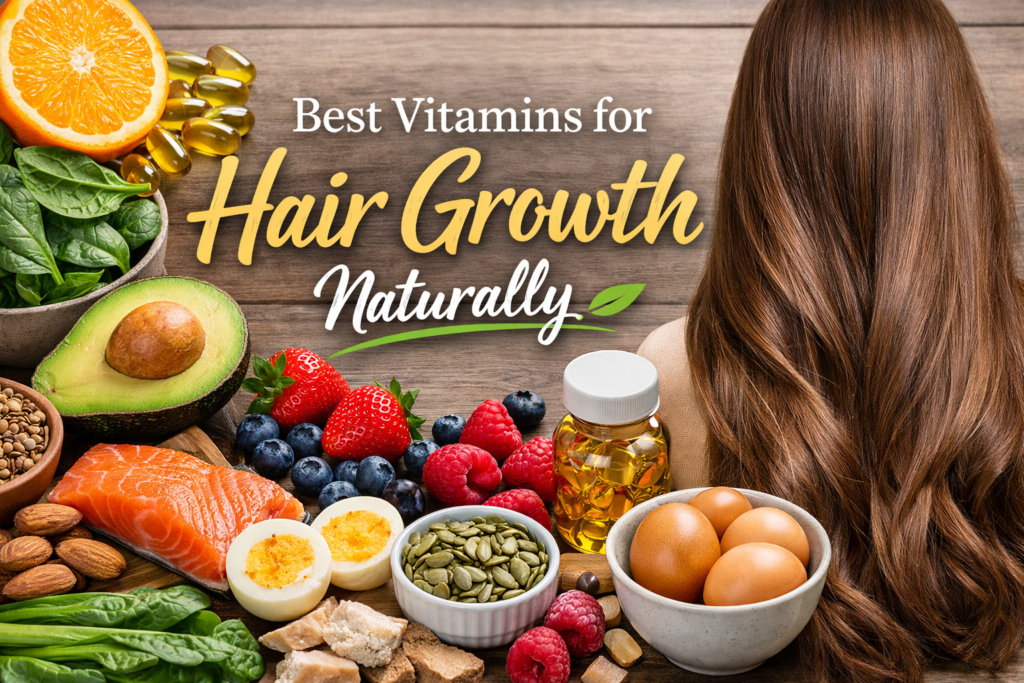
Biotin (Vitamin B7) is commonly found in eggs, nuts, seeds, bananas, and sweet potatoes. These foods help strengthen hair strands and support keratin production.
Vitamin D can be obtained from sunlight exposure, fatty fish like salmon, egg yolks, and fortified dairy products, all of which help stimulate hair follicles.
Vitamin A is abundant in carrots, spinach, sweet potatoes, and pumpkin, supporting scalp moisture and preventing dryness.
Vitamin C is rich in citrus fruits, strawberries, bell peppers, and broccoli, aiding collagen production and improving iron absorption.
Vitamin E is present in almonds, sunflower seeds, avocados, and olive oil, helping protect hair follicles from oxidative damage.
Iron is found in leafy greens, lentils, beans, red meat, and dates, ensuring proper oxygen supply to hair roots.
Zinc is available in whole grains, nuts, seeds, dairy products, and legumes, supporting hair tissue repair and reducing shedding.
Including a variety of these foods in your daily diet helps ensure balanced nutrition and consistent hair growth. A well-rounded diet rich in vitamins is one of the most reliable ways to maintain strong, healthy hair naturally.
4. Benefits for Hair (Evidence-Based)
Scientific research shows that proper vitamin intake plays a vital role in maintaining healthy hair growth, especially when deficiencies are present. The best vitamins for hair growth naturally support the biological processes that strengthen hair follicles, improve scalp health, and reduce excessive shedding.
B-complex vitamins, particularly biotin, help support keratin production, which is essential for strong hair strands. Studies have found that biotin deficiency is associated with brittle hair and hair thinning, and restoring adequate levels can improve hair strength in deficient individuals.
Vitamin D is linked to hair follicle cycling and activation. Research suggests that low vitamin D levels may be associated with hair loss conditions, as this vitamin helps stimulate dormant hair follicles and supports the growth phase of the hair cycle.
Vitamin A contributes to healthy sebum production, which naturally moisturizes the scalp and prevents dryness. However, evidence also shows that excessive vitamin A intake may lead to hair loss, highlighting the importance of balanced, natural intake through food sources.
Vitamin C plays a key role in collagen synthesis and acts as a powerful antioxidant. It also enhances iron absorption, which is essential for oxygen delivery to hair follicles. Improved iron status has been linked to reduced hair shedding in individuals with low iron levels.
Vitamin E helps reduce oxidative stress on the scalp and improves blood circulation, both of which are important for maintaining healthy hair follicles. Some studies indicate that antioxidant support can contribute to improved hair density over time.
Overall, evidence supports that when nutritional gaps are addressed, the best vitamins for hair growth naturally can improve hair strength, texture, and growth consistency. While vitamins are not a cure for all types of hair loss, they play a crucial role in supporting healthy hair when used as part of a balanced diet.
You can find more hair care tips and remedies on bestcutandcare.com to keep your hair strong and healthy.
5. Daily Recommended Intake
Ensuring you consume the right amount of vitamins is essential for supporting healthy hair growth. While taking the best vitamins for hair growth naturally through whole foods is safe, it’s important to meet daily requirements without exceeding them, as both deficiency and excess can affect hair health.
Here are the recommended daily intakes for key vitamins linked to hair growth:
- Biotin (Vitamin B7): 30–100 mcg per day. Found in eggs, nuts, and seeds, biotin helps strengthen hair and prevent breakage.
- Vitamin D: 600–800 IU per day. Sunlight exposure and fatty fish can provide sufficient vitamin D, supporting hair follicle activation.
- Vitamin A: 700–900 mcg per day. Found in carrots, sweet potatoes, and spinach, it supports scalp health and natural hair oils.
- Vitamin C: 75–90 mg per day. Citrus fruits, bell peppers, and broccoli improve collagen production and iron absorption, aiding hair strength.
- Vitamin E: 15 mg per day. Nuts, seeds, and avocados supply vitamin E, which protects hair follicles from oxidative damage.
- Iron: 8–18 mg per day. Leafy greens, beans, and red meat deliver iron for proper oxygen supply to hair roots.
- Zinc: 8–11 mg per day. Found in whole grains, dairy, and legumes, zinc supports hair tissue repair and reduces shedding.
Consuming these vitamins through natural foods ensures your body receives nutrients in a bioavailable form. Following the recommended daily intake of the best vitamins for hair growth naturally helps maintain strong, healthy hair without relying heavily on supplements.
6. Signs of Vitamin Deficiency
Recognizing early signs of nutrient deficiency is key to maintaining healthy hair. When the body lacks the best vitamins for hair growth naturally, hair may become weak, brittle, or fall out more easily. Understanding these warning signs can help you adjust your diet before hair damage becomes severe.
Some common signs of vitamin deficiency that affect hair include:
- Excessive Hair Fall: Frequent shedding or thinning may indicate a lack of biotin, iron, or zinc.
- Slow Hair Growth: Hair that grows slower than usual can be a sign of insufficient vitamin D or B-complex vitamins.
- Brittle or Dry Hair: A deficiency in vitamin A, vitamin E, or essential fatty acids may cause hair to become dry, rough, and prone to breakage.
- Dull Hair: Lack of antioxidants such as vitamin C and vitamin E can make hair look lifeless and lackluster.
- Scalp Issues: Dry, flaky, or itchy scalp can be linked to insufficient vitamin A or zinc levels.
- Weak Nails: Since vitamins supporting hair also affect nail health, weak or brittle nails may indicate deficiencies.
By paying attention to these signs and including the best vitamins for hair growth naturally in your diet, you can restore hair health, strengthen strands, and promote growth from the root.
7. Bioavailability & Absorption Factors
Not all vitamins are absorbed equally by the body, and this plays a crucial role when focusing on the best vitamins for hair growth naturally. Bioavailability refers to the proportion of a nutrient that the body can effectively absorb and use. Even if your diet contains enough vitamins, poor absorption can limit their benefits for hair health.
Several factors influence vitamin absorption:
- Vitamin Type: Fat-soluble vitamins (A, D, E, K) require dietary fats for proper absorption, while water-soluble vitamins (B-complex, C) are absorbed more easily but need regular replenishment.
- Food Pairings: Some vitamins are better absorbed with complementary nutrients. For example, vitamin C enhances iron absorption, and healthy fats improve the uptake of vitamins A, D, and E.
- Digestive Health: Conditions like low stomach acid, gut inflammation, or enzyme deficiencies can reduce nutrient absorption, affecting hair growth.
- Cooking Methods: Overcooking vegetables can destroy heat-sensitive vitamins such as vitamin C and some B vitamins. Light steaming or raw consumption preserves nutrients.
- Supplement Form: If supplements are used, the chemical form matters. Whole foods often provide vitamins in their most bioavailable form, making them more effective for natural hair growth.
By understanding bioavailability, you can maximize the benefits of the best vitamins for hair growth naturally. Pairing vitamins with the right foods, maintaining gut health, and choosing nutrient-rich natural sources ensures that hair follicles receive the nutrition they need to stay strong and healthy.
Visit bestcutandcare.com for easy-to-follow guides on maintaining shiny, nourished hair.
8. Best Combinations for Synergy
Vitamins often work better when combined with other nutrients. Using the best vitamins for hair growth naturally in complementary pairs can improve absorption, enhance hair follicle function, and maximize overall hair health. Understanding these synergies allows you to get the most benefit from your diet without relying heavily on supplements.
1. Vitamin C + Iron
Vitamin C improves the absorption of non-heme iron found in plant-based foods like spinach and lentils. Adequate iron is essential for delivering oxygen to hair follicles, and pairing it with vitamin C ensures maximum uptake.
2. Vitamin A + Healthy Fats
Vitamin A is fat-soluble, meaning it needs dietary fat to be absorbed effectively. Combining vitamin A-rich foods like carrots or sweet potatoes with avocado, olive oil, or nuts supports scalp health and natural hair oils.
3. Biotin + Zinc
Both biotin and zinc are vital for keratin production and hair tissue repair. Consuming eggs, nuts, or seeds alongside zinc-rich legumes or whole grains can strengthen hair strands and reduce shedding.
4. Vitamin E + Vitamin C
These antioxidants work together to combat oxidative stress that can damage hair follicles. Eating vitamin E-rich foods like almonds and avocados with vitamin C-rich fruits like oranges or strawberries enhances follicle protection.
5. Vitamin D + Calcium
Vitamin D helps the body absorb calcium, which is important for hair follicle signaling and growth. Fatty fish, eggs, and dairy products naturally combine these nutrients for better hair health.
By understanding these combinations, you can naturally enhance the effectiveness of the best vitamins for hair growth naturally. A balanced diet that focuses on nutrient synergy ensures stronger, healthier hair from root to tip.
9. Who Might Need Supplements
While it’s always best to get nutrients from whole foods, some people may not meet their daily requirements through diet alone. In such cases, supplements can help ensure the body receives the best vitamins for hair growth naturally and support healthy hair growth.
People who may benefit from supplements include:
- Individuals with Restricted Diets: Vegans or vegetarians may lack biotin, vitamin D, or iron if they don’t consume fortified foods.
- People with Digestive Issues: Conditions like Crohn’s disease, celiac disease, or low stomach acid can reduce nutrient absorption, making supplementation necessary.
- Those with Hair Thinning or Excessive Hair Fall: If hair shows signs of weakness or slow growth, supplements can help correct deficiencies more quickly.
- Older Adults: Aging can reduce the body’s ability to absorb certain vitamins like vitamin D and B12, affecting hair and scalp health.
- People in Low Sunlight Areas: Vitamin D deficiency is common in regions with limited sun exposure, which can impact hair follicle activity.
It’s important to note that supplements should complement a nutrient-rich diet, not replace it. Consulting a healthcare professional before starting any supplement regimen ensures safe and effective use of the best vitamins for hair growth naturally, tailored to individual needs.
10. Safety & Side Effects
While the best vitamins for hair growth naturally are generally safe when obtained through a balanced diet, it’s important to be aware of potential side effects, especially when using supplements. Excessive intake of certain vitamins can negatively impact hair health and overall wellbeing.
Key safety considerations include:
- Vitamin A: High doses of vitamin A supplements can cause hair loss, dizziness, and liver damage. It’s best to get vitamin A from natural food sources such as carrots, spinach, and sweet potatoes.
- Vitamin D: While vitamin D is essential for hair follicle health, too much can lead to nausea, kidney issues, and elevated calcium levels. Sunlight and dietary sources usually provide sufficient amounts.
- Iron: Over-supplementation may cause constipation, nausea, or even more serious complications like organ damage. Iron should only be supplemented if a deficiency is confirmed.
- Zinc: Excess zinc can interfere with the absorption of other minerals and lead to digestive issues.
- General caution: Combining multiple high-dose supplements without medical guidance can cause nutrient imbalances or toxicity.
To maximize hair growth safely, focus on getting the best vitamins for hair growth naturally from whole foods first. Supplements should only be used under professional guidance when dietary intake is insufficient. This approach ensures stronger hair without risking side effects.
11. Meal Ideas / Practical Tips
Incorporating the best vitamins for hair growth naturally into your daily diet doesn’t have to be complicated. By combining a variety of nutrient-rich foods, you can support stronger, healthier hair while enjoying delicious meals. Here are some practical tips and ideas:
1. Start Your Day with Biotin-Rich Foods
- Include eggs, oats, or almonds in your breakfast. These foods are high in biotin, which strengthens hair and promotes keratin production.
2. Add Vitamin C and Iron to Your Meals
- Pair iron-rich foods like spinach, lentils, or beans with vitamin C sources such as bell peppers, oranges, or strawberries. This combination enhances iron absorption and supports hair follicle health.
3. Include Healthy Fats for Fat-Soluble Vitamins
- Avocados, nuts, seeds, and olive oil help your body absorb fat-soluble vitamins like A, D, and E, which are essential for scalp health and hair growth.
4. Enjoy Vitamin D-Rich Foods or Safe Sun Exposure
- Fatty fish, eggs, and fortified dairy products provide vitamin D. Spending 10–15 minutes in sunlight daily also helps maintain optimal levels.
5. Snack on Zinc-Rich Foods
- Include pumpkin seeds, chickpeas, and whole grains in your snacks or meals to support hair tissue repair and prevent shedding.
6. Maintain a Balanced, Colorful Diet
- Eating a variety of fruits, vegetables, lean proteins, nuts, and seeds ensures you get a full spectrum of vitamins for hair growth naturally.
By following these meal ideas and practical tips, you can maximize the benefits of the best vitamins for hair growth naturally and promote stronger, healthier hair without relying solely on supplements.
For expert advice on daily hair routines and scalp care, check out bestcutandcare.com.
12. How Long Vitamins Take to Work
Many people want quick results when trying to improve hair growth, but it’s important to have realistic expectations. When focusing on the best vitamins for hair growth naturally, it can take time before you notice visible improvements.
Hair grows in cycles, and nutrients work at the follicle level, which means changes won’t appear overnight. Generally, you can expect:
- Initial Improvement (4–6 weeks): Hair may feel stronger, less brittle, and more hydrated as vitamin levels stabilize in the body.
- Visible Hair Growth (8–12 weeks): New hair growth becomes noticeable, and hair shedding may reduce once deficiencies are corrected.
- Significant Results (3–6 months): With consistent intake of nutrient-rich foods and a healthy hair care routine, overall hair density and shine improve substantially.
Factors that influence how quickly vitamins work include age, metabolism, overall health, diet quality, and whether there was a pre-existing deficiency. It’s important to combine the best vitamins for hair growth naturally with a balanced diet, proper hydration, and a gentle hair care routine for optimal results.
Remember, patience and consistency are key—healthy hair growth is a gradual process, and vitamins support long-term hair health rather than providing instant fixes.
Conclusion
Achieving strong, healthy hair starts from within, and proper nutrition plays a crucial role. By incorporating the best vitamins for hair growth naturally into your diet, you can support hair follicles, reduce breakage, and promote consistent growth. Whole foods like eggs, leafy greens, nuts, seeds, and citrus fruits provide these essential vitamins in their most effective, bioavailable form.
While supplements can help in cases of deficiency, focusing on nutrient-rich foods ensures safer, long-term results. Combined with a balanced diet, proper hair care, and patience, these vitamins can make a significant difference in the strength, thickness, and shine of your hair.
Investing in natural nutrition today lays the foundation for healthier hair tomorrow.
FAQs.
Q1: What are the best vitamins for hair growth naturally?
The best vitamins for hair growth naturally include biotin (B7), vitamin D, vitamin A, vitamin C, vitamin E, iron, and zinc. These vitamins support hair follicle health, strengthen hair strands, and promote consistent growth.
Q2: Can vitamins regrow hair naturally?
Vitamins support natural hair regrowth, especially when deficiencies are the cause. While they strengthen hair and reduce breakage, they are most effective when combined with a healthy diet and proper hair care routine.
Q3: How can I get hair growth vitamins from food?
Foods like eggs, leafy greens, nuts, seeds, citrus fruits, and fatty fish provide the best vitamins for hair growth naturally. Pairing certain foods, such as vitamin C-rich fruits with iron-rich vegetables, improves absorption.
Q4: How long does it take for vitamins to improve hair growth?
Visible results usually take 8–12 weeks, with stronger hair noticeable in 4–6 weeks. Consistent intake and a balanced diet are key to long-term improvements.
Q5: Do I need supplements to get these vitamins?
Most people can get the best vitamins for hair growth naturally through whole foods. Supplements may be necessary for those with dietary restrictions, deficiencies, or absorption issues, but it’s best to consult a healthcare professional first.
Learn about the best vitamins for hair growth naturally, how they strengthen hair follicles, prevent breakage, and promote healthy, thicker hair. Discover natural food sources, practical tips, and how to include these vitamins in your daily diet for stronger, healthier hair.