
Table of Contents
1. Understanding Hair Fall vs Hair Breakage
Before answering the common question does hair dryer cause hair fall, it is essential to understand the difference between hair fall and hair breakage. Many people confuse these two, which often leads to unnecessary worry about using hair dryers.
What Is Hair Fall?
Hair fall refers to the natural shedding of hair from the root. Each hair strand grows from a follicle and follows a normal growth cycle that includes growth, rest, and shedding. Losing 50 to 100 hairs per day is considered normal and does not indicate hair loss or damage.
Hair fall usually occurs due to:
- Natural hair growth cycle
- Hormonal changes
- Stress or illness
- Nutritional deficiencies
- Genetics
When hair falls out from the root, you may notice a white bulb at the end of the strand.
What Is Hair Breakage?
Hair breakage, on the other hand, happens when the hair shaft snaps due to weakness or damage. The hair does not fall from the root but breaks somewhere along its length, often making hair look thin, frizzy, or uneven.
Common causes of hair breakage include:
- Excessive heat styling
- Improper blow-drying techniques
- Lack of moisture
- Chemical treatments
- Rough towel drying
Broken hair strands usually appear shorter and uneven and do not have a white bulb at the end.
Read expert advice on safe styling techniques.
2. Why This Difference Matters
When people ask does hair dryer cause hair fall, they are often noticing hair breakage, not actual hair fall. Hair dryers typically do not affect the hair follicles inside the scalp, which means they do not directly cause hair to fall from the root.
How a Hair Dryer Affects Hair and Scalp
When considering the question does hair dryer cause hair fall, it is important to understand how hair dryers interact with hair and scalp. While hair dryers are a convenient styling tool, their impact depends on temperature, airflow, and frequency of use.
Effect on Hair
Hair is made of keratin proteins, which give it strength and structure. Using a hair dryer incorrectly can cause:
Moisture Loss:
High heat can evaporate water from the hair shaft, making it dry and brittle. Dry hair is more prone to breakage, which people often confuse with hair fall.
Cuticle Damage:
The hair cuticle is the outer protective layer. Excessive heat can lift or crack the cuticle, leading to frizz, split ends, and weak hair strands.
Weakening of Hair Shaft:
Repeated exposure to high temperatures can reduce hair elasticity, making it easier for strands to snap during brushing or styling.
Effect on Scalp
While a hair dryer primarily affects the hair shaft, the scalp can also experience changes:
Mild Dryness or Irritation: Prolonged exposure to hot air can dry the scalp and reduce natural oils.
Temporary Sensitivity: High heat too close to the scalp can cause discomfort but does not damage hair follicles, which are responsible for hair growth.
What This Means for Hair Fall
Hair dryers do not directly cause hair fall from the root. The shedding of hair that occurs is usually part of the natural growth cycle. The visible hair damage caused by heat often results in breakage, which can be mistaken for hair loss.
Tips to Minimize Hair Damage
Use low to medium heat settings
Keep the dryer 6–8 inches away from hair
Limit blow-drying to once a day or less
Apply a heat protectant spray before styling
By following these practices, you can enjoy the convenience of a hair dryer without causing unnecessary hair fall.
Want more tips on keeping your hair healthy and strong? Visit bestcutandcare.com for easy hair care routines and expert advice.
3. Heat Damage vs Natural Hair Shedding
Many people worry about the question does hair dryer cause hair fall, but it’s important to distinguish between heat damage and natural hair shedding. Understanding the difference can help you maintain healthy hair without unnecessary concern.
Natural Hair Shedding
Hair naturally goes through a growth cycle, which includes three stages:
Anagen (Growth Phase) – Hair actively grows for 2–6 years.
Catagen (Transition Stage) – Hair growth halts as the follicle shifts into a resting phase before shedding.
Telogen (Resting Phase) – Hair naturally falls out to make way for new growth.
Losing 50–100 hairs a day is completely normal. These hairs fall from the root, and you may notice a small white bulb at the end. This type of shedding is unrelated to hair dryers.
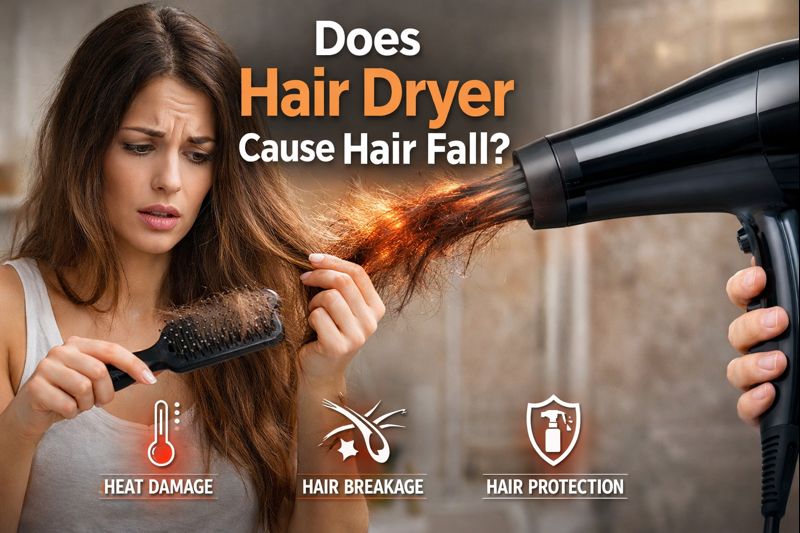
Heat Damage from Hair Dryers
Heat damage occurs when hair is exposed to high temperatures, especially repeatedly or for long periods. Unlike natural shedding, heat damage affects the hair shaft, not the root. Common signs include:
Split ends and frizz
Dry, brittle hair
Hair snapping when brushed
Dull appearance
This damage may look like hair fall, but it is actually breakage, which is why many people mistakenly believe their hair is falling out due to a hair dryer.
What This Means for Hair Dryer Users
When asking does hair dryer cause hair fall, the answer is: not directly. Hair dryers can contribute to hair breakage if misused, but they do not make hair fall from the root. Using a hair dryer responsibly—with moderate heat, proper distance, and protective products—prevents heat damage while keeping hair healthy.
4. Can Heat Weaken Hair Roots?
A common concern among hair care enthusiasts is whether using a hair dryer can harm the scalp or hair follicles. Many people ask, does hair dryer cause hair fall, because they worry that heat might weaken the roots and lead to hair loss. Let’s break it down.
Understanding Hair Roots
Hair grows from follicles located beneath the scalp. The root is protected by layers of skin and nourished by blood vessels that supply nutrients. This structure makes hair roots resilient to external heat applied to the hair shaft.
How Heat Affects Hair
Hair dryers primarily affect the hair shaft, the visible part of your hair, not the root. Excessive heat can cause:
- Dryness of the hair shaft
- Split ends and breakage
- Frizz and dull appearance
However, the follicle and root inside the scalp remain largely unaffected by normal hair dryer use. For hair to fall from the root, damage would need to reach the follicle, which is highly unlikely under standard blow-drying conditions.
When Heat Can Be Harmful
While heat does not weaken roots directly, improper usage can cause indirect scalp problems that might contribute to hair concerns over time:
- Extremely high heat applied directly to the scalp for long periods
- Repeated daily use without protection
- Using a hair dryer on already sensitive or inflamed scalp
Even in these cases, the effect on roots is usually temporary and does not cause permanent hair loss.
Expert Take
Dermatologists agree that using a hair dryer correctly—with moderate heat, safe distance (6–8 inches from scalp), and a heat protectant—does not weaken hair roots or increase hair fall. Most visible hair loss after blow-drying is breakage, not shedding from the root.
Key Takeaways
- Hair roots are protected and resilient.
- Hair dryers affect the shaft, not the root.
- Heat damage can lead to breakage, but does not cause true hair fall.
- Correct usage keeps hair healthy and prevents breakage.
5. Role of High Temperature in Hair Damage
One of the biggest concerns when styling hair is heat damage. Many people wonder, does hair dryer cause hair fall when using high heat settings. Understanding how temperature affects your hair can help you style safely without compromising hair health.
How High Heat Affects Hair
Hair consists of keratin, a protein that gives it both strength and flexibility.
- Dry Out Hair Shaft:
Excessive heat removes moisture from the hair shaft, making it brittle and prone to breakage. - Damage the Cuticle Layer:
The cuticle is the outer protective layer of hair. High heat can lift or crack it, causing frizz, split ends, and dull hair. - Weaken Hair Elasticity:
Repeated exposure to high temperatures reduces hair flexibility, making strands more likely to snap during brushing or styling.
High Heat vs Hair Fall
It is important to note that while high heat can cause hair breakage, it does not directly make hair fall from the root. The hair follicle remains protected beneath the scalp, which means that blow drying—even at high temperatures—cannot directly cause permanent hair loss.
What people often notice is short, broken strands after blow drying, which can be mistaken for hair fall. This is why many ask the question does hair dryer cause hair fall—but in most cases, the issue is breakage, not actual shedding from the root.
Tips to Reduce Heat Damage
- Use low to medium heat settings instead of maximum temperature.
- Keep the hair dryer 6–8 inches away from your hair.
- Apply a heat protectant spray before blow drying.
- Limit the frequency of daily blow drying.
By controlling the heat level, you can enjoy styling your hair safely while preventing damage and minimizing breakage.
6. Does Daily Blow Drying Increase Hair Fall?
A common concern among hair care enthusiasts is whether frequent blow drying can make hair fall out. Many people ask, does hair dryer cause hair fall, especially when using it every day. Let’s examine the facts.
What Happens with Daily Blow Drying
Using a hair dryer daily can expose hair to repeated heat, which may:
- Cause Breakage: Continuous high heat weakens the hair shaft, making strands more prone to snapping.
- Dry Out Hair: Daily blow drying removes natural moisture, leaving hair dry, brittle, and frizzy.
- Irritate the Scalp: If hot air is directed too close, it can temporarily dry the scalp and reduce its natural oils.
Hair Fall vs Hair Breakage
It’s important to note the difference:
- Hair Fall: Hair shedding from the root, part of the natural growth cycle.
- Hair Breakage: Hair snapping along the shaft due to damage, often mistaken for hair loss.
Daily blow drying does not make hair fall from the root unless there is an underlying scalp or follicle problem. What you may notice is increased hair breakage, which can look like hair fall.
How to Blow Dry Daily Without Damage
If you need to blow dry your hair every day, follow these tips to minimize damage and prevent hair breakage:
- Use low or medium heat settings.
- Keep the dryer 6–8 inches away from hair.
- Apply a heat protectant spray before styling.
- Limit blow drying to the scalp and roots first, then move to the ends.
- Avoid high-speed airflow close to the hair shaft.
By following these precautions, you can style your hair daily without causing true hair fall, ensuring your hair stays healthy, strong, and smooth.
7. Hair Dryer vs Air Drying: Which Causes More Hair Fall?
When it comes to styling, many people wonder whether using a hair dryer is worse than letting hair air dry. A common question is: does hair dryer cause hair fall, and comparing these two methods helps clarify the truth.
Hair Dryer: Pros and Cons
Pros:
- Quick drying, which reduces time hair is wet and fragile
- Can help achieve smooth, styled hair
- Useful in cold or humid climates
Cons:
- High heat can cause hair shaft damage if used improperly
- Frequent daily use may lead to breakage
- Incorrect distance or speed may dry out the scalp
Air Drying: Pros and Cons
Pros:
- No heat, so minimal risk of hair shaft damage
- Preserves natural moisture and hair strength
- Gentle on hair cuticles
Cons:
- Hair remains wet longer, which can make it temporarily fragile
- Damp hair can tangle and break during brushing
- Takes longer, which may be inconvenient for styling
Key Difference
The main difference is how the hair is stressed:
- Hair Dryer: Heat stress may cause breakage, not hair fall from the root.
- Air Drying: Water weight and friction while brushing wet hair may cause temporary breakage.
In most cases, air drying is gentler on the hair shaft, but using a hair dryer responsibly does not cause hair fall. The visible damage from hair dryers is usually hair breakage, not shedding from the follicle.
Recommendations for Safe Hair Drying
- If using a hair dryer, always use low to medium heat.
- Keep the dryer at a safe distance from hair.
- If air drying, gently towel blot or comb hair to reduce tangles.
- Apply heat protectants if blow drying is necessary.
By understanding the differences, you can choose the method that suits your hair type without worrying about hair fall.
Looking for ways to maintain shiny, frizz-free hair? Explore more guides on bestcutandcare.com for professional hair care tips.
8. Impact of Hair Dryer on Different Hair Types
Many people ask, does hair dryer cause hair fall, but the effects of blow drying can vary depending on hair type. Understanding how your hair responds to heat is essential for safe styling.
Straight Hair
- Characteristics: Smooth, fine to medium thickness
- Hair Dryer Impact:
- Less prone to tangling, so damage is usually minimal
- High heat can make hair look flat or greasy
- Tips: Use low to medium heat and a round brush for volume without stressing hair shafts
Wavy Hair
- Characteristics: Loose waves, medium texture
- Hair Dryer Impact:
- Heat can help define waves, but overuse can lead to frizz
- Frequent blow drying may weaken hair strands
- Tips: Use a diffuser attachment and cool or medium heat to preserve natural waves
Curly Hair
- Characteristics: Tight curls, often dry and fragile
- Hair Dryer Impact:
- High heat can cause breakage and frizz
- Hair dryers can make curls lose their natural shape
- Tips: Always use a diffuser, low heat, and leave-in conditioner to reduce damage
Thick or Coarse Hair
- Characteristics: Stronger hair shafts, dense volume
- Hair Dryer Impact:
- Can handle higher heat, but prolonged exposure may dry hair
- Can cause split ends if used frequently without protection
- Tips: Use medium heat and section hair to reduce styling time and prevent breakage
Fine or Thin Hair
- Characteristics: Fragile, prone to tangling
- Hair Dryer Impact:
- More susceptible to breakage if high heat is applied
- Can make hair look limp or damaged quickly
- Tips: Always use low heat, heat protectant, and avoid direct airflow on the same section repeatedly
Key Takeaway
While different hair types react differently to heat, using a hair dryer responsibly does not cause hair fall from the root. Most visible issues are breakage or dryness, which can be managed with proper heat settings and protective products.
9. Common Myths About Hair Dryer and Hair Fall
When it comes to hair care, there are many misconceptions about blow drying. A frequent question is does hair dryer cause hair fall, and addressing these myths can help readers make informed choices.
Myth 1: Hair Dryers Make Hair Fall Out
Reality: Hair dryers do not make hair fall from the root. Most visible “hair loss” after blow drying is actually hair breakage, not shedding. Hair roots are protected beneath the scalp, and normal blow drying, when done properly, does not affect them.
Myth 2: High Heat Is Always Better for Faster Drying
Reality: While higher heat can dry hair faster, it can also damage the hair shaft, leading to split ends, dryness, and breakage. This can make hair appear to fall out, but the root is unaffected. Low to medium heat is sufficient and safer for daily use.
Myth 3: Blow Drying Damages Hair Instantly
Reality: Hair dryers do not immediately damage hair if used correctly. Most damage occurs over time due to repeated high-heat exposure or improper technique. Using protective sprays and proper heat settings prevents long-term harm.
Myth 4: Air Drying Is Always Safer
Reality: Air drying may seem gentle, but wet hair is fragile and prone to breakage during combing or brushing. The key is gentle handling, whether you air dry or blow dry with low heat.
Myth 5: Hair Dryers Can Harm Hair Roots
Reality: Hair roots are resilient and protected by the scalp. Even daily use of a hair dryer does not weaken the follicles or cause true hair fall. Heat affects the hair shaft, not the root.
Key Takeaways
- Most fears about hair dryers causing hair fall are based on misunderstanding hair breakage vs hair fall.
- Using a hair dryer correctly with low to medium heat, proper distance, and heat protectant keeps hair healthy.
- Understanding these myths reduces unnecessary worry and helps maintain strong, smooth hair.
10. When Hair Dryer Use Becomes Harmful
Many people worry about does hair dryer cause hair fall, and while hair dryers are generally safe, misuse can lead to hair damage. Understanding when blow drying becomes harmful is essential to prevent breakage and maintain healthy hair.
Signs You Are Overusing a Hair Dryer
- Excessive Heat Exposure
Using high heat too often can dry out the hair shaft, causing split ends and frizz. While this is breakage, not true hair fall, it can make hair look thinner over time. - Holding the Dryer Too Close
Keeping the hair dryer less than 6 inches from your scalp can stress hair strands and dry out your scalp, leading to brittle hair. - Daily Blow Drying Without Protection
Repeated daily use without a heat protectant spray increases the risk of hair breakage, especially for fine or fragile hair types. - Over-Styling Wet Hair
Hair is most fragile when wet. Using a hair dryer aggressively on wet hair can snap strands, which may appear as hair fall. - Ignoring Hair Type Needs
Different hair types require different heat levels. Using high heat on curly or fine hair can cause unnecessary damage.
How to Avoid Harmful Blow Drying
- Use low to medium heat settings
- Keep the dryer 6–8 inches away from hair
- Apply a heat protectant before drying
- Limit blow drying to 2–3 times a week, if possible
- Use diffusers for curly hair or section hair to reduce styling time
Key Takeaway
Hair dryers do not directly cause hair fall, but improper use can lead to breakage and dryness, which may be mistaken for hair loss. By following safe practices, you can enjoy styling your hair without risking damage.
11. Signs Your Hair Dryer Is Damaging Your Hair
Many people worry, does hair dryer cause hair fall, and while blow dryers do not directly affect the hair root, improper use can damage the hair shaft. Recognizing early signs of damage helps prevent breakage and maintain healthy hair.
Split Ends
- What it is: Hair tips that split into two or more strands
- Why it happens: Excessive heat weakens the hair shaft
- How to prevent: Use low to medium heat and trim regularly
Frizz and Rough Texture
- What it is: Hair appears dry, frizzy, and lacks shine
- Why it happens: Cuticle layers lift due to high heat, causing moisture loss
- How to prevent: Apply leave-in conditioners or heat protectants before drying
Hair Breakage
- What it is: Hair snapping along the shaft
- Why it happens: Frequent blow drying on high heat or wet hair
- How to prevent: Dry hair in sections and avoid over-styling wet hair
Dry or Irritated Scalp
- What it is: Flaky, itchy, or sensitive scalp
- Why it happens: Heat from the dryer removes natural oils
- How to prevent: Keep the dryer at a safe distance (6–8 inches) and use cool shot settings occasionally
Hair Appears Thinner
- What it is: Hair looks limp or less voluminous
- Why it happens: Breakage over time reduces hair length and density
- How to prevent: Reduce frequency of blow drying and use protective styling products
Key Takeaway
If you notice these signs, it does not mean your hair is falling from the root. Most damage is breakage, which can be repaired with proper hair care. By using your hair dryer responsibly, you can style your hair safely without causing hair fall.
Curious about the best styling techniques without damaging your hair? Check out bestcutandcare.com for step-by-step blow drying tips.
12. How to Use a Hair Dryer Without Causing Hair Fall
Many people worry, does hair dryer cause hair fall, but with the right techniques, you can enjoy styling your hair safely. Following proper practices helps prevent breakage, dryness, and damage, ensuring your hair stays healthy.
Use Low to Medium Heat
High temperatures can weaken the hair shaft over time. Using low or medium heat settings reduces the risk of damage while still drying hair efficiently.
Keep a Safe Distance
Hold the hair dryer 6–8 inches away from your hair and scalp. This prevents excessive heat exposure and protects the hair shaft from drying out.
Apply Heat Protectant
Before blow drying, apply a heat protectant spray or serum. These products coat the hair shaft, reducing moisture loss and preventing breakage.
Dry Hair in Sections
Instead of drying all hair at once, divide hair into sections. Focus on one section at a time to reduce exposure and speed up drying without damaging strands.
Limit Daily Use
Frequent blow drying can increase hair shaft stress. Limit daily use to prevent cumulative damage. If possible, let hair air dry partially before using a dryer.
Use a Diffuser for Curly Hair
For curly or wavy hair, a diffuser attachment helps distribute heat evenly and reduces frizz, while preserving natural curl patterns.
Finish with Cool Air
Using the cool shot button at the end of styling closes the hair cuticle, locks in moisture, and adds shine while reducing heat stress.
Key Takeaway
When asking does hair dryer cause hair fall, the answer is clear: used correctly, hair dryers do not cause hair to fall from the root. Most issues people notice are breakage, which can be minimized with proper technique, protective products, and moderate heat.
13. Best Hair Dryer Settings to Prevent Hair Loss
Many people wonder, does hair dryer cause hair fall, and the answer often depends on how you use it. Choosing the right settings can help prevent breakage and protect your hair’s health.
Heat Settings
- Low to Medium Heat: Using low or medium heat is safest for all hair types. It dries hair effectively without causing excessive damage to the hair shaft.
- High Heat: Only use sparingly for thick or coarse hair. Frequent high heat can make hair brittle and prone to snapping, which may look like hair fall.
Speed Settings
- Medium Speed: Provides enough airflow to dry hair quickly without stressing the hair shaft.
- High Speed: Should be used cautiously, as strong airflow can tangle and weaken hair strands.
Cool Shot Option
- Use the cool shot at the end of styling to seal the hair cuticle, lock in moisture, and add shine.
- Helps reduce heat stress and minimize the appearance of hair breakage.
Attachments
- Diffuser: Ideal for curly or wavy hair to evenly distribute heat and reduce frizz.
- Concentrator Nozzle: Helps target specific sections and prevents excess heat exposure on the same area.
Distance and Technique
- Keep the dryer 6–8 inches from hair to avoid over-drying.
- Move the dryer continuously instead of holding it on one spot.
- Dry hair in sections, starting from the roots to ends, for even and safe drying.
Key Takeaway
Using a hair dryer with the right heat, speed, and attachments prevents hair shaft damage and reduces the risk of breakage. When these precautions are followed, the answer to does hair dryer cause hair fall is clearly no—proper usage keeps hair healthy and strong.
14. Expert Opinions: Dermatologists’ View on Hair Dryers
A key question many people ask is, does hair dryer cause hair fall. To provide a credible answer, it’s important to consider what hair and scalp experts say. Dermatologists agree that the way you use a hair dryer determines its effect on hair health.
Hair Dryers Do Not Affect Hair Roots
According to dermatologists:
Hair roots are protected beneath the scalp, so standard blow drying does not cause hair to fall from the follicle.
Most concerns arise from hair shaft damage, which can be mistaken for hair loss.
Heat Can Cause Breakage, Not True Hair Loss
Experts note that:
Prolonged exposure to high heat can weaken hair strands, making them dry, fragile, and more likely to break.
Visible breakage may appear as hair fall, but it does not indicate loss from the root.
Using low to medium heat, keeping a safe distance, and applying a heat protectant are key to preventing damage.
Safe Hair Dryer Practices Recommended by Professionals
Dermatologists recommend:
Limit high heat usage—especially on fine or chemically treated hair.
Use a diffuser for curly or wavy hair to minimize frizz.
Dry hair in sections rather than focusing on one spot.
Apply a heat protectant before every blow dry.
Keep the dryer moving and maintain at least 6–8 inches distance from hair and scalp.
Expert Verdict
In summary, dermatologists agree:
Hair dryers do not directly cause hair fall from the root.
Improper use can cause hair breakage, which can be mistaken for shedding.
Following professional guidelines ensures hair stays strong, shiny, and healthy.
This expert insight reinforces that the focus keyword question—does hair dryer cause hair fall—is largely a myth when used properly.
Conclusion
After examining the facts, the question does hair dryer cause hair fall can be answered clearly: hair dryers do not cause hair to fall from the root when used correctly. Most concerns arise from hair breakage, which happens when strands become weak, dry, or brittle due to excessive heat or improper styling techniques.
Key Takeaways
- Hair breakage vs. hair fall: Visible hair loss from blow drying is usually breakage, not true shedding from the root.
- Use proper techniques: Low to medium heat, safe distance (6–8 inches), sectioning hair, and heat protectants are essential.
- Hair type matters: Fine, curly, or chemically treated hair requires extra care to prevent damage.
- Expert confirmation: Dermatologists agree that responsible use of hair dryers is safe and does not lead to permanent hair loss.
By following these guidelines, you can style your hair safely, maintain healthy strands, and enjoy the convenience of a hair dryer without worrying about hair fall. Remember, the key is moderation, protection, and awareness of your hair’s needs.
FAQs
1. Does using a hair dryer cause hair fall?
No, hair dryers do not cause hair fall from the root. Most visible hair loss after blow drying is actually hair breakage, which happens when strands become dry or brittle due to excessive heat or improper technique.
2. Can high heat from a hair dryer damage hair?
Yes, high heat can make hair dry, brittle, and prone to breakage, especially if used frequently. However, it does not affect hair follicles or roots. Using low to medium heat with a heat protectant is recommended.
3. How often can I safely use a hair dryer?
It’s best to limit daily use. 2–3 times per week is ideal for most hair types. For daily use, always use low to medium heat, keep the dryer at a safe distance, and apply a heat protectant.
4. Does blow drying damage curly or fine hair more?
Yes, curly, wavy, and fine hair are more prone to heat damage. Using a diffuser, low heat, and protective products helps minimize breakage while maintaining hair health.
5. What’s the difference between hair fall and hair breakage?
Hair fall occurs at the root as part of the natural hair growth cycle, while hair breakage happens along the shaft due to heat, friction, or styling damage. Blow drying usually causes breakage, not root shedding.
6. Can air drying prevent hair damage better than blow drying?
Air drying is gentler since it avoids heat, but wet hair is fragile and can break when brushed or combed. Blow drying with proper technique is safe and often faster, without causing hair fall.
7. How can I protect my hair while using a hair dryer?
- Use low to medium heat
- Keep the dryer 6–8 inches away from hair
- Apply a heat protectant spray
- Dry hair in sections
- Use a diffuser for curly hair
8. Do dermatologists recommend hair dryers?
Yes, dermatologists confirm that hair dryers are safe when used correctly. Responsible blow drying does not cause permanent hair loss and can be part of a healthy hair care routine.
Worried about hair fall from blow drying? Discover the truth about does hair dryer cause hair fall, how heat affects hair, and expert tips to protect your hair from damage.